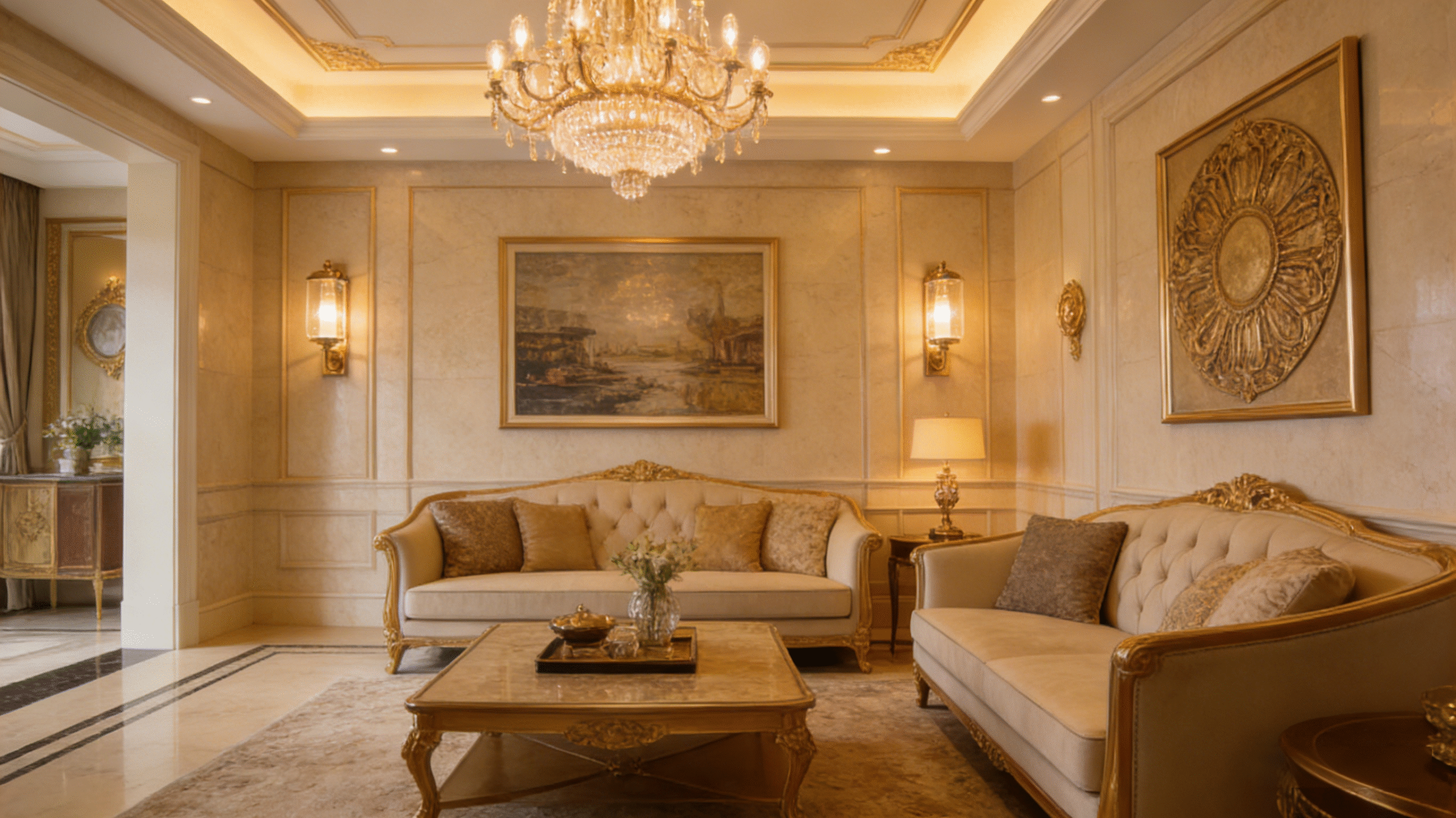
Before you order custom lighting, stop and think first. What do you want your lights to do? Do you want the room to feel cozy or bright for work? Be careful not to make mistakes like forgetting about energy efficiency. Picking the wrong color temperature is also a problem. You might also miss important spots. Consider the questions to ask that will help you avoid surprises.
Key Takeaways
- Figure out why you need the lighting. Choose if you want a warm feel or a bright place to work. This choice will guide your whole lighting plan.
- Think about how big your space is and its shape. Make sure your lighting fits the room’s use. Put lights in the right spots to stop shadows and glare.
- Look for ways to save energy. Pick LED lights and smart controls to use less power and save money. These also make your space better.
Questions to Ask About Lighting Purpose
What is the main function of your lighting?
When you start planning custom lighting, you need to know what you want your lights to do. Are you hoping to create a cozy spot for family dinners, or do you need bright lights for a busy office? The main function of your lighting shapes every decision you make. Take a look at some common goals for different spaces:
| Setting | Goals |
|---|---|
| Residential | Ambiance and comfort, personal style, task lighting for activities like cooking or reading |
| Commercial | Functionality, branding, customer experience, safety, and productivity |
If you want to read or cook, you need task lighting. If you want to relax, you might choose softer lights. In a store or office, you may need lighting that helps people work or feel welcome. These questions to ask help you focus on your needs before you order anything.
How should the lighting affect the mood or ambiance?
Lighting changes how a room feels. Warm lights make a space feel calm and inviting. Cool lights help people stay alert and focused. The purpose of your lighting guides your choice of fixtures and controls. Kitchens often need a mix of ambient, task, and accent lighting. Living rooms may need softer lights for a relaxing mood. In commercial spaces, lighting can show off your brand and help customers feel comfortable.
Tip: Think about how you want people to feel in your space. The right lighting can make a big difference in mood and comfort.
Residential lighting usually focuses on comfort and style. Commercial lighting needs to be durable and energy-efficient. You also need to think about your budget and control systems. These questions to ask will help you match your lighting to your goals and avoid mistakes.
Space & Layout Considerations
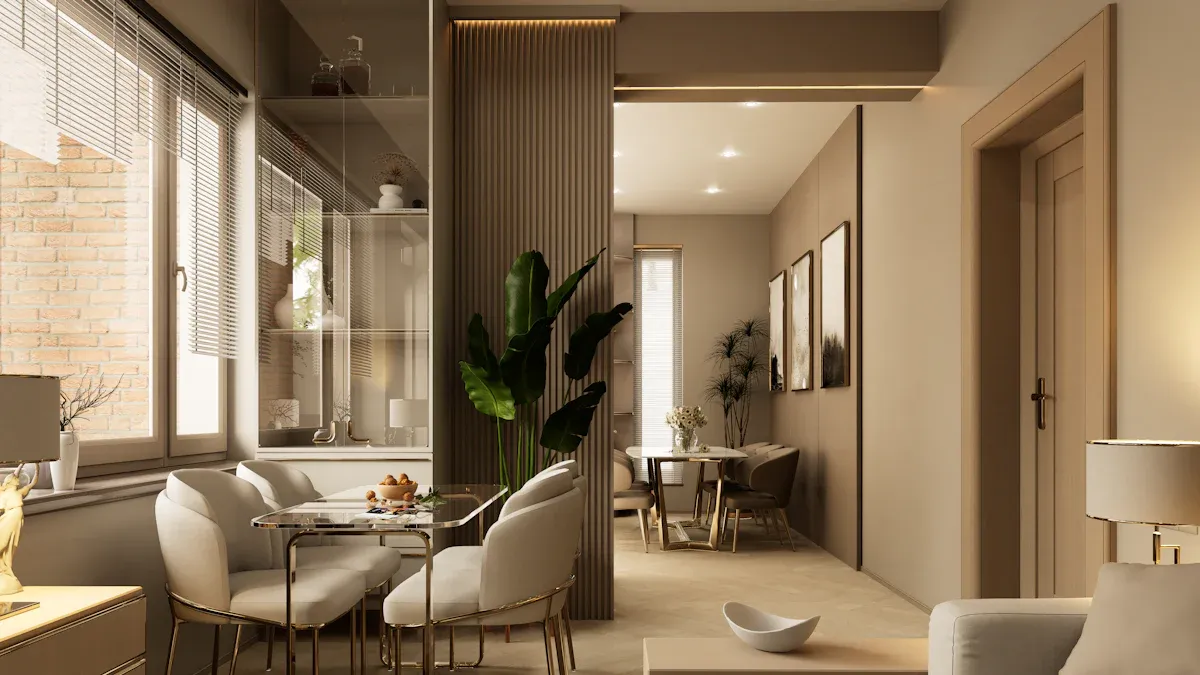
Is your space size and layout suitable for custom lighting?
Before you pick out custom lighting, take a good look at your space. The size and shape of your room matter a lot. A small den needs different lighting than a big, open living area. You want to match your lighting to the room’s purpose. For example, kitchens and workspaces need brighter lights, while bedrooms and living rooms feel better with softer, layered lighting.
- Think about these points when planning your lighting:
- Every room works best with three layers of light: ambient (general), task (focused), and accent (for highlights).
- The size and purpose of your room help you decide how many fixtures you need and where to put them.
- Layering different types of light makes your space both useful and attractive.
Tip: Walk around your room and imagine where you need light the most. This helps you spot dark corners or areas that need extra attention.
Will the lighting placement meet your needs?
Lighting placement can make or break your space. If you put lights in the wrong spots, you might get shadows or glare that bother your eyes. Good placement helps you see better and makes your room feel just right.
- Here’s why placement matters:
- Proper lighting cuts down on shadows and glare, making your space more comfortable.
- Smart placement helps you move around safely and find what you need.
- Good lighting design boosts both the look and function of your room.
If you skip careful planning, you might end up with poor lighting that hurts your eyes or makes it hard to work. Bad lighting can even lower your mood and make you less productive. So, take your time and plan where each light should go. Your eyes-and your mood-will thank you!
Brightness & Output
How much light do you need for each area?
You want your space to feel just right. Too much light can feel harsh. Too little can make it hard to see. Each room needs a different amount of brightness. Lighting experts use “lux” to measure how bright a space should be. Here’s a quick guide to help you:
| Setting | Recommended Lux |
|---|---|
| Living rooms general | 50-150 |
| Casual reading | 150 |
| Study | 150-750 |
| Bedroom general | 50-150 |
| Kitchen general | 150 |
| Kitchen working areas | 400 |
| Bathrooms | 150-300 |
| Halls and landings | 100-150 |
| Stairs | 100-150 |
| Dining rooms | 150-450 |
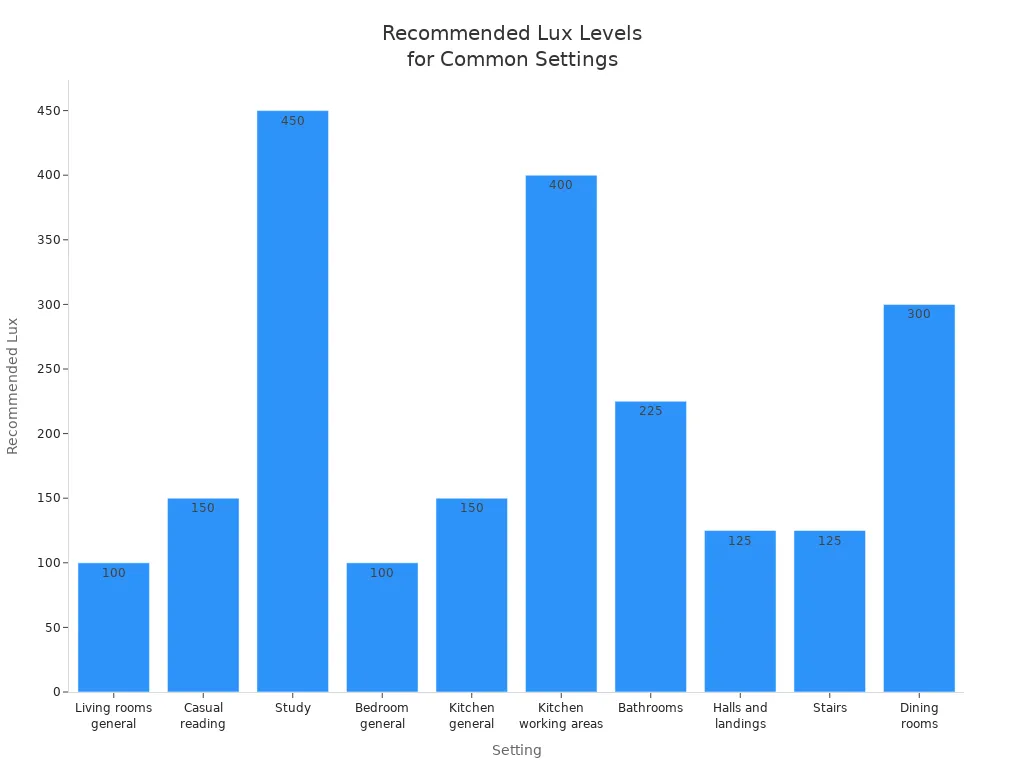
Tip: Think about what you do in each room. Reading, cooking, and working need more light than relaxing or watching TV.
Are recommended lumens being met?
You need to check if your lighting plan gives enough brightness. Professionals use a simple formula to figure this out. First, measure your room. Then, use the right lux level for your activity. Here’s how you can do it:
| Step | Description |
|---|---|
| 1 | Measure the area (length × width) in square feet. |
| 2 | Find the recommended lux for your space from the table. |
| 3 | Multiply the area by the lux to get the total lumens. |
If you follow these steps, you can make sure your custom lighting meets your needs. You will avoid dark corners and make every area work better for you.
Color Temperature Choices
What color temperature fits your space?
Color temperature changes how your room feels. You can pick warm, neutral, or cool light. Each one works best in different places. Take a look at this table to see what fits your needs:
| Setting | Color Temperature Range (K) | Description |
|---|---|---|
| Residential | 2200-2700 | Warm light, comforting glow, ideal for bedrooms. |
| Residential | 3000-3500 | Neutral light, soft white, suitable for various spaces. |
| Residential | 4000-4500 | Cool light, crisp white, good for task lighting. |
| Commercial | 5000-6500 | Cooler temperatures for specialty task lighting. |
If you want a cozy bedroom, choose warm light. For kitchens or work areas, cool light helps you see better. Offices and stores often use even cooler lights to help people focus.
Tip: Try to match the color temperature to the main activity in each room. You will notice a big difference in comfort and style.
Does warm or cool light suit your style?
You might wonder if you should pick warm or cool light. The answer depends on how you want your space to feel and what you do there. Here’s what lighting research says:
- Cooler white light (4000K-5000K) boosts alertness and helps you work better.
- People under 5000K lighting show better concentration and react faster.
- Too much cool light can cause eye strain or headaches.
Warm light feels relaxing and can lift your mood. Cool light makes you feel awake and ready to work. If you spend lots of time in one spot, mix both types to avoid stress or discomfort. Think about your style and needs before you decide.
Fixture Style & Materials

Do the materials and finishes match your design?
When you pick custom lighting, you can choose what fits your style. Do you like modern, rustic, or classic looks? The right material helps your space feel perfect. Here are some popular choices for custom fixtures:
- Metal like brass, copper, or iron is strong and looks fancy.
- Hand-blown glass gives a soft glow and makes rooms pretty.
- Ceramics and wood have natural textures that feel warm.
- Natural fibers such as rattan make spaces look relaxed and cozy.
Custom lighting uses high-quality materials like solid brass, hand-blown glass, and wood. These last longer than cheap, mass-made lights. You will see the difference in how good your fixtures look every year.
Tip: Hold a sample or check photos of the finish before you buy. Make sure it matches your furniture, wall colors, and style.
Are the fixtures durable for your environment?
You want your lights to last, even in tough places like kitchens, bathrooms, or outside. Some materials handle moisture, heat, or cold better than others. Look at this table to see how different materials work:
| Material | Corrosion Resistance | Temperature Stability |
|---|---|---|
| Stainless Steel | High resistance because of a special layer | Good, handles changes in temperature |
| Aluminum Alloys | Great resistance, perfect for outdoor use | Stays in shape when temperatures change |
| Fiberglass-Reinforced Plastic | Good resistance, very light | Excellent, works in hot or cold weather |
If you live near the ocean or in a wet place, stainless steel or aluminum alloys are best. For outdoor areas, fiberglass-reinforced plastic is strong in any weather. Always pick a fixture material that fits your environment so your lighting stays nice and tough.
Questions to Ask About Supplier Reputation
Is the supplier experienced with custom lighting?
You want your custom lighting project to go well. It is important to know if the supplier has experience. A good supplier has a strong reputation and knows custom lighting. You can check if they have won awards or are part of lighting groups. If you can, visit their factory to see how they work. This lets you see their quality control. If they answer your questions quickly, it shows they care about your project and will help if there are problems.
Here is a simple list to help you check a supplier’s reputation:
- See if they have awards or belong to lighting groups.
- Read reviews from customers on Google or lighting websites.
- Ask for names of past clients near you.
- Visit their factory if you can.
- Notice if they answer your questions fast and clearly.
Are there positive reviews or testimonials?
Customer feedback tells you a lot about a supplier. When you read reviews, you learn from real people who used their products. Artists and designers often share how custom lighting helped their artwork. One artist said, “Your framing projector lights are amazing! My original artwork has never looked better.” Another customer said, “The hidden framing projectors are so good at lighting our art collection.” These stories show the supplier gives good quality and makes customers happy.
Tip: Always check for new reviews and testimonials. They help you find suppliers who keep customers happy and fix problems fast.
Asking the right questions about supplier reputation helps you avoid problems and pick someone you can trust.
Certifications & Safety
Are fixtures certified for safety?
Safety is very important for custom lighting. You should always check for certifications. Certified fixtures are tested to make sure they are safe. These tests look for problems that could happen at home or work. Here are some groups that give out certifications:
| Certification Body | Description |
|---|---|
| IESNA | Sets rules for color, brightness, and electrical parts. |
| DLC | Checks LED lights for brightness, color, and lifespan. |
| UL | Tests for dangers like electric shock and fire. Gives different levels of approval. |
If you see these marks, your lights follow strict rules. This means you worry less about fires or shocks. Certified fixtures also last longer and work better.
Tip: Ask your supplier to show proof of certification before buying. You have the right to know!
Do they meet local codes?
Cities and states have their own lighting rules. Your custom fixtures must follow these codes. If your lights do not meet local rules, you may have problems. You might not pass inspections or get insurance.
Insurance companies check your lighting when setting rates. If your lights meet emergency standards, you could get better deals. If your lights do not follow rules, claims can be harder if something goes wrong.
Always make sure your lighting has safety certifications and meets local codes. This keeps your space safe and helps you avoid trouble later.
Electrical & System Compatibility
Will the lighting work with your current setup?
You want your new custom lights to fit your home’s electrical system. Sometimes, new LED lights do not match old wiring. Older circuits were made for bulbs like incandescent or fluorescent. These bulbs use different power than LEDs. If you do not check if they match, you might see flickering or buzzing. Sometimes, the lights might not turn on at all.
Here are some common electrical problems you could have:
| Issue Description | Impact |
|---|---|
| Loose electrical connections | Buzzing and flickering can happen. Other parts may get damaged. |
| Voltage drops | Lights may flicker or look dim, especially with many fixtures. |
| Incorrect LED driver | Power can be unstable. Connections may be loose. Flickering can occur. |
| Compatibility with existing circuits | Old circuits may not work well with LEDs. This causes problems. |
| Poor electrical connections | Voltage can drop. Lights may be less bright. Heat can hurt parts. |
Always ask if your new lights will work with your current setup. If you do not know, talk to a professional. Electricians know how to balance circuits and manage voltage. They help keep your lights bright and safe.
Are there special installation needs?
Custom lighting sometimes needs special steps to install. You might need new wiring or special drivers. Heavy fixtures may need extra support. If you skip these steps, your lights may not work right. They could even be unsafe.
Professional electricians install wiring carefully. They plan for future upgrades and new technology. Their training helps them manage voltage and circuit loads. They follow national electrical codes to keep things safe.
Here are some things to remember:
- Make sure your lighting follows national electrical codes.
- Think about voltage and how much power each circuit can handle.
- Work with experts to fit your lighting into your space.
Professionals often work with designers and contractors. They help your custom lighting fit with your home’s systems. Planning ahead helps you avoid problems and get great results for your space.
Technology & Energy Efficiency
Are energy-saving options available?
You want your custom lighting to use less energy and save money. Today, there are smart ways to lower costs and help the planet. Many lighting systems use LED technology. LEDs use 75% less energy than old bulbs. You can save a lot of money every year by switching to LEDs. Some businesses see their bills go down by 30% to 50%. Utility companies and government programs sometimes give rebates. These rebates can pay for up to half of your project.
Modern lighting also uses smart controls. Photocells and motion sensors turn lights on only when needed. This means you do not waste power. You can also pick systems that use 100% renewable energy. These choices help the planet and let you go off-grid if you want.
| Technology Type | Features |
|---|---|
| 100% Renewable Energy | Cuts down on pollution and lets you work off-grid. |
| Photocell + Motion Sensor | Turns on lights only when needed, saving energy. |
| Flexible Siting | Easy to set up without lots of digging or work. |
Tip: Ask your supplier about rebates and smart controls. You might save more than you think!
Is the latest lighting technology included?
You want your space to look good and work well. New lighting technology gives you more control and better results. Some brands let you change brightness, color, and timing with your phone or tablet. Smart systems can learn your habits and help you use less energy.
High-performance lighting lasts longer and needs less fixing. You spend less time on repairs and more time enjoying your space. Flexible siting makes it easy to put lights where you want. You do not need a lot of extra work.
- Long life and lower costs to run.
- Smart controls help save even more energy.
- Big drop in energy bills.
Smart lighting upgrades can cut your energy use by 40% on average. You get a modern look, lower bills, and help the planet.
Customization & Timeline
What customization options are offered?
You want your lighting to fit your space and style. Custom lighting gives you choices that regular fixtures cannot. You can pick the voltage that matches your building. You can set how bright you want the lights to be. You can even choose the color of the housing or add your own branding. Some systems let you adjust how long the lights stay on after movement. You also get to pick the socket type, so your lights work with smart controls.
Here’s a quick look at what you can customize:
| Customization Option | Description |
|---|---|
| Voltage Ranges | Pick the right voltage for your electrical system. |
| Lux Thresholds | Set the brightness level that triggers your lights. |
| Housing Colors and Branding | Choose colors and add logos for a unique look. |
| Time-Delay Settings | Control how long lights stay on after movement. |
| Socket Type | Make sure your lights work with smart systems. |
Tip: Ask your supplier about all the options. You might find features that make your lighting smarter and easier to use.
What is the production and installation timeline?
You want to know how long your custom lighting will take. Most projects need up to eight weeks for fabrication. This does not include delivery or installation. If you order a large number of fixtures, you might wait around 45 days. Some suppliers can finish quick jobs in just 38 days for up to 500 fixtures. Always check with your supplier about the timeline. Planning ahead helps you avoid delays and keeps your project on track.
Warranty & Support
What warranty is provided?
You want to feel safe when you buy custom lighting. A good warranty protects your money. It shows the supplier trusts their products. Most LED fixtures have a five-year warranty. This covers problems with materials and how they are made. If something breaks, you can get it fixed, replaced, or get credit. Some brands give extra coverage for finishes, especially for outdoor lights. Wired Custom Lighting gives two years for fixtures. They give one year for finishes. HID or fluorescent fixtures may not have any warranty. Always read the details before you buy.
| Product Type | Warranty Duration | Coverage Details |
|---|---|---|
| LED Light Fixtures and Components | 5 years | Covers problems with materials and how they are made; you can get a replacement, repair, or credit. |
| LED Modules | 5 years | You can exchange broken modules; not broken if less than 10% of LEDs fail. |
| HID and Fluorescent Fixtures | N/A | Sold ‘AS IS’ with no warranty. |
| Poles | 1 year | Covers problems; you can get a replacement, repair, or credit. |
| Pole and Outdoor Fixture Finishes | 5 years | Covers finish problems; extra 2 years for Dura Grip® Plus finish. |
| Fixtures by Wired Custom Lighting | 2 years | Covers mechanical and electrical problems; only repair or replacement costs. |
| Finishes | 1 year | Covers problems if cared for; does not cover unfinished or aging finishes. |
Tip: Always ask for the warranty terms in writing. This helps you know what to expect if you need help later.
Is after-sales support available?
After-sales support is important too. You want help if you have questions or problems after you install your lights. Good support makes customers happy and loyal. Many people say strong support makes them trust a brand more. You get answers fast, and problems get fixed quickly. Good support can help you save money over time.
- Good after-sales service makes customers happy and loyal.
- Helpful support sets clear expectations and makes the brand look good.
- Strong support teams can bring more business to the supplier.
- Great service after buying often decides if you stay with a brand.
If you ever need help, you want a supplier who cares. Ask about their support before you buy.
Look at all ten questions before you buy custom lighting. Planning ahead helps you avoid problems and get good results. Lighting experts can help you make smart choices. They help you avoid mistakes and finish your project on time. You can save money, make your space feel nicer, and raise your property’s value.
- Talking to experts helps you design better and finish faster.
- Good choices use less energy and save you money.
- Custom lighting can make your property worth more and look better.
FAQ
How do you choose the right custom lighting for a small room?
Pick fixtures that fit your space. Use layered lighting. Try wall sconces or recessed lights. Avoid big, bulky fixtures.
Can you install custom lighting yourself?
You can install simple fixtures if you know how. For complex or wired systems, hire a licensed electrician. Safety comes first!
What should you do if your custom lights flicker?
Check the bulbs and connections. Make sure the fixture matches your power supply. If the problem stays, call a professional.