In casino interior design, lighting plays a role far beyond basic illumination. It helps define the architectural character of a space, creates visual interest, and contributes to a distinctive atmosphere.
For architects, interior designers, and commercial project contractors, creating a large-scale decorative lighting feature presents a unique challenge: how can a complex design concept be transformed into a physical installation while maintaining its intended shape and visual impact?
At Tikanna Lighting, we specialize in custom decorative lighting solutions for commercial and hospitality projects.
In this real project case study, we explore the development of a large-scale architectural lighting installation for a casino interior, following the process from technical drawings and 3D modeling to workshop fabrication and completed installation.
The result is a striking, funnel-shaped lighting structure featuring a geometric lattice design and vibrant blue-purple illumination.
Project Overview: A Custom Statement Lighting Installation for a Casino
The centerpiece of this project is a large architectural lighting installation designed for a casino interior.
Unlike a traditional chandelier, the installation features a distinctive inverted funnel-shaped structure, with a wide upper opening that gradually narrows toward the lower section.
A repeating diamond-pattern lattice forms the outer structure, while illuminated surfaces inside create a vibrant blue and purple visual effect.
Installed beneath a circular recessed ceiling feature, the structure extends downward into the interior, becoming a prominent architectural centerpiece.
Its dramatic form and colorful illumination help establish a recognizable visual identity within the casino environment.
Project at a Glance
- Project Type:Custom casino architectural lighting
- Application:Casino interior
- Lighting Design:Large-scale inverted funnel-shaped installation
- Key Visual Features:Diamond-pattern lattice and blue-purple illumination
- Project Documentation:Technical drawings, 3D model, workshop fabrication, and completed installation
- Manufacturer:Tikanna Lighting
This project demonstrates how custom lighting manufacturing can support architectural concepts that go beyond conventional decorative fixtures.
The Design Challenge: Turning Complex Geometry into a Real Lighting Structure
One of the most distinctive aspects of this project is its unusual geometric shape.
The installation expands outward near the ceiling and gradually narrows toward its lower section, creating a dramatic curved silhouette.
Unlike standard chandeliers with relatively simple structures, this design incorporates a continuous lattice pattern that follows the changing geometry of the installation.
Transforming such a concept into a physical structure requires careful coordination between design visualization, component arrangement, fabrication, and installation planning.
Maintaining the Curved Architectural Form
The overall shape is central to the visual effect.
The finished installation needs to preserve the proportions and flowing profile represented in the original design.
For large-scale decorative lighting, even relatively small changes in geometry can affect the final appearance.
Creating a Consistent Diamond Lattice Pattern
The exterior features numerous intersecting members arranged in a repeating diamond pattern.
As the structure changes diameter, the lattice follows the curved surface.
This makes geometric consistency an important consideration during design development and fabrication.
Integrating Lighting with the Interior Architecture
The installation also needs to work visually with its surroundings.
In the completed casino interior, the wide upper section aligns with a circular ceiling feature, creating a strong architectural connection.
The lighting structure becomes part of the interior composition rather than a separate decorative accessory.
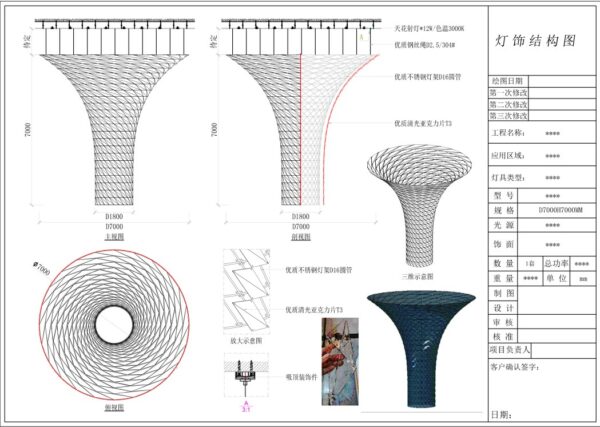
Step 1: Technical Drawings Define the Lighting Concept
The first stage shown in the project documentation is a detailed technical drawing.
The drawing illustrates the overall silhouette, dimensional relationships, and geometric arrangement of the installation.
Multiple views, including elevation drawings and a top view, help communicate how the structure expands near the ceiling and narrows toward its lower section.
For custom architectural lighting projects, technical drawings provide an important foundation for manufacturing discussions.
They help designers and production teams understand the intended form and identify details that need further coordination.
Important considerations include:
- Overall dimensions and proportions
- Curved structural geometry
- Arrangement of repeated lattice elements
- Connection and suspension requirements
- Component assembly and installation access
Clear technical documentation helps reduce ambiguity when developing large, non-standard lighting installations.
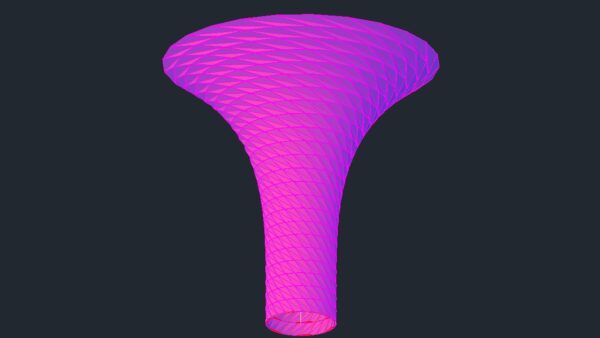
Step 2: 3D Modeling Visualizes the Complex Structure
The next stage is represented by a three-dimensional digital model.
The model clearly shows the inverted funnel shape and the diamond lattice wrapping around the curved surface.
This provides a more intuitive understanding of the installation than a two-dimensional drawing alone.
For complex architectural lighting projects, 3D modeling is especially useful because the final design must be considered from multiple viewpoints.
Why 3D Modeling Matters
Visualizing the overall form
A three-dimensional model helps designers and manufacturers examine the complete shape and its proportions.
Reviewing geometric patterns
The repeated lattice arrangement can be assessed as it follows the curved profile.
Supporting communication
Architects, interior designers, and manufacturing teams can use the model as a common visual reference.
Clarifying manufacturing requirements
The model helps identify areas where component design, assembly, or structural coordination may require further consideration.
For bespoke lighting projects, combining technical drawings with 3D modeling creates a clearer connection between the original design concept and practical production planning.
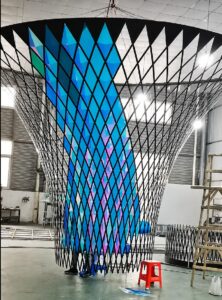
Step 3: Workshop Fabrication Brings the Design to Life
The workshop photograph shows the lighting structure during fabrication, when the distinctive funnel-shaped form has become a large physical assembly.
The dark intersecting members create the diamond-pattern lattice, closely reflecting the geometric character shown in the 3D model.
This stage provides visible evidence of the transition from digital design to a tangible architectural installation.
Key Fabrication Considerations
Structural form
The assembled components need to maintain the intended overall silhouette.
Geometric alignment
The repeated lattice members must follow the changing curvature while preserving the design’s visual rhythm.
Component assembly
Large-scale installations require careful coordination of individual elements and their connections.
Handling and installation preparation
The dimensions and geometry of a large lighting structure influence how it can be handled, transported, and installed.
The workshop stage highlights the manufacturing coordination required for a complex custom lighting design.
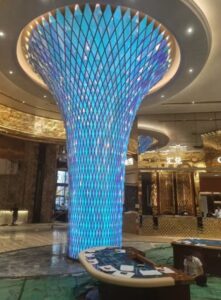
Step 4: Final Installation in the Casino Interior
The completed installation demonstrates how the original design concept translates into a finished architectural feature.
The structure is positioned beneath a circular recessed ceiling element, with its wide upper section integrated into the overhead architectural composition.
The narrower lower portion extends toward the floor, emphasizing the vertical proportions of the space.
The dark lattice remains clearly visible against the brightly illuminated interior.
Blue light dominates the installation, while purple accents introduce additional color variation and depth.
Together, the geometry and illumination create a dramatic centerpiece within the casino.
Creating a Distinctive Visual Focal Point
The installation attracts attention through three key design characteristics.
- Dramatic scale and proportion
The large vertical structure establishes a strong visual presence within the interior.
- Repeating geometric patterns
The diamond lattice introduces rhythm and texture, giving the installation a recognizable architectural identity.
- Colorful illumination
The blue-purple lighting creates a striking contrast with the darker structural members and surrounding interior finishes.
Rather than simply illuminating the room, the installation contributes to the overall architectural experience.
Why Custom Architectural Lighting Matters in Casino Design
Casino interiors often incorporate distinctive architectural features to establish a memorable visual identity.
Custom decorative lighting can support this goal by allowing designers to develop lighting elements specifically for the surrounding space.
Architectural Integration
A custom lighting installation can be designed around ceiling openings, interior proportions, and architectural details.
In this project, the inverted funnel-shaped structure creates a direct visual relationship with the circular ceiling feature.
Design Flexibility
Custom manufacturing allows greater freedom in exploring unusual forms, complex patterns, and project-specific dimensions.
This flexibility is particularly valuable when conventional lighting products cannot achieve the intended design.
Visual Identity
A large-scale illuminated structure can become a defining feature of an interior.
Its geometry, proportions, and lighting effects contribute to a distinctive atmosphere.
Coordination with Project Requirements
Complex lighting installations require consideration of manufacturing feasibility, structural support, electrical requirements, installation access, and future maintenance.
Early coordination between designers, manufacturers, and project contractors is important for translating ambitious lighting concepts into practical installations.
What This Project Demonstrates About Custom Lighting Manufacturing
This casino lighting project illustrates several important aspects of bespoke architectural lighting.
First, technical drawings help define the overall form and establish a reference for project development.
Second, 3D modeling makes complex geometry easier to visualize and communicate.
Third, workshop fabrication transforms the digital concept into a physical structure.
Finally, the completed installation demonstrates how custom decorative lighting can become an integrated architectural feature.
For architects and commercial project buyers, this process highlights the importance of working with a manufacturer capable of discussing both design intent and practical production requirements.
Why Work with Tikanna Lighting?
Tikanna Lighting specializes in custom decorative lighting solutions for hospitality, residential, and commercial projects.
With over 17 years of industry experience, we provide OEM/ODM and project-oriented lighting manufacturing services.
Our capabilities support projects involving custom chandeliers, decorative lighting fixtures, and large-scale architectural lighting installations.
We work with designers, architects, contractors, and project buyers who require lighting solutions developed around specific design concepts and interior environments.
From reviewing drawings and design references to coordinating customized manufacturing requirements, our focus is on helping clients turn creative lighting ideas into practical products.
Whether your project involves a casino, hotel, restaurant, entertainment venue, or other commercial interior, Tikanna Lighting can discuss your custom lighting requirements.
Frequently Asked Questions About Custom Casino Lighting
What is custom casino architectural lighting?
Custom casino architectural lighting refers to lighting fixtures or installations developed specifically for the architectural design and functional requirements of a casino interior. These may include sculptural chandeliers, illuminated decorative structures, and other project-specific lighting features.
Can a custom lighting installation be manufactured from a 3D model?
Yes. A 3D model can provide a useful design reference for custom lighting development. Technical drawings, dimensions, material specifications, and installation requirements are typically needed to assess manufacturing feasibility.
What should architects consider when designing large-scale casino lighting?
Important considerations include the installation’s dimensions, geometry, structural support, electrical requirements, lighting effects, installation access, and maintenance needs.
Can custom lighting be designed to match a casino’s interior architecture?
Yes. Custom decorative lighting can be developed to coordinate with architectural features, ceiling layouts, interior finishes, and project-specific design concepts.
What information should I send to a custom lighting manufacturer?
Useful information includes CAD drawings, 3D models, architectural renderings, reference images, desired dimensions, material preferences, lighting specifications, and installation requirements.
Bring Your Custom Architectural Lighting Design to Life
Planning a casino, entertainment venue, or commercial interior project that requires a distinctive lighting feature?
At Tikanna Lighting, we help architects, interior designers, contractors, and project buyers explore custom decorative lighting solutions tailored to their design requirements.
Whether you have a detailed CAD drawing, 3D model, architectural rendering, or reference photograph, our team can review your project and discuss possible manufacturing solutions.
Send us your design drawings, 3D models, or project requirements to discuss your custom lighting project.
Contact Us:
Email: info@tikannalighting.com
Phone / WhatsApp: +86 139 2580 8607