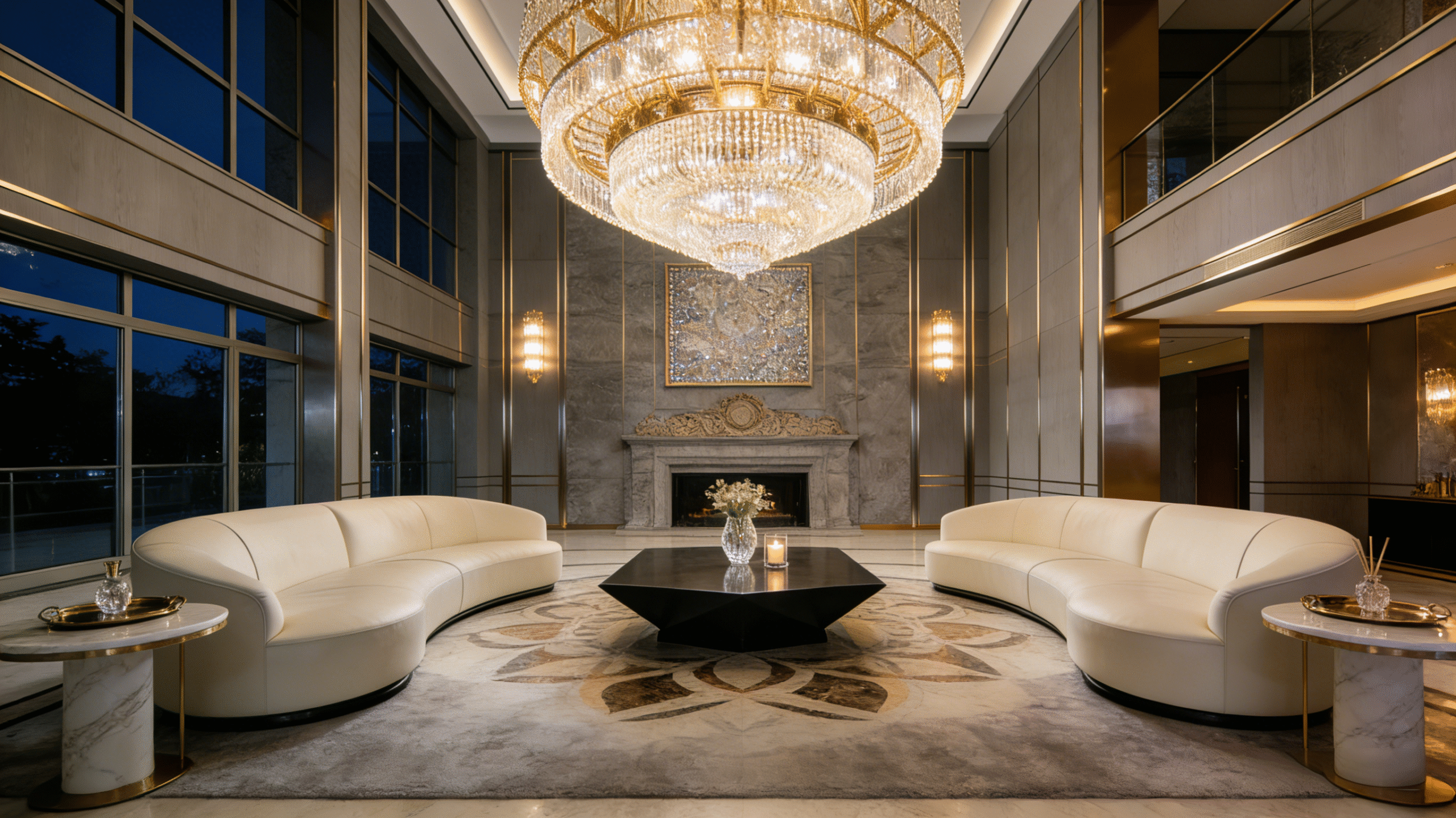
Have you ever walked into a high-end villa and felt amazed by the light? Custom lighting transforms double-height spaces, blending style and function. Layered lighting creates warmth and luxury, turning villas into stunning showpieces.
Key Takeaways
- Use layered lighting (ambient, task, accent) to create a balanced, cozy atmosphere.
- Choose large-scale fixtures like chandeliers or oversized pendants for grand visual impact.
- Assess natural light patterns before adding artificial lighting to optimize brightness.
- Incorporate smart controls (dimmers, scene settings) to adjust mood and functionality.
- Consult lighting professionals for custom solutions that align with your style and space.
Assessing Double-Height Spaces
Zoning and Focal Points
Double-height spaces feel expansive and open. Divide the area into functional zones—seating, dining, reading—and light each appropriately. Highlight a focal point like a staircase, fireplace, or artwork with strategic lighting to add drama and elegance.
Hang pendant lights or chandeliers over key areas to create a dramatic, luxurious effect.
Common architectural challenges in double-height spaces include:
| Challenge | Description |
|---|---|
| Temperature Regulation | Large spaces make consistent temperature control difficult, potentially increasing energy costs. |
| Acoustic Issues | Sound echoes without soft surfaces to absorb it. |
| Maintenance Challenges | High ceilings make cleaning and repairs more difficult and time-consuming. |
| Higher Construction Costs | Requires stronger structural elements and specialized furnishings. |
| Loss of Usable Floor Area | Vertical space could have been used for additional rooms or storage. |
Natural Light Evaluation
Double-height rooms often feature large windows that flood the space with sunlight. Observe how sunlight moves through the room during the day to identify areas needing supplemental lighting and where softer, ambient light would enhance the ambiance.
Room Function and Flow
Lighting should support how the space is used. Use soft, warm lighting in living areas for relaxation and brighter, focused light in dining or activity zones. Ensure pathways are well-lit for safety, and consider both aesthetics and practicality in your design.
Scale and Visual Impact
Fixture Size and Placement
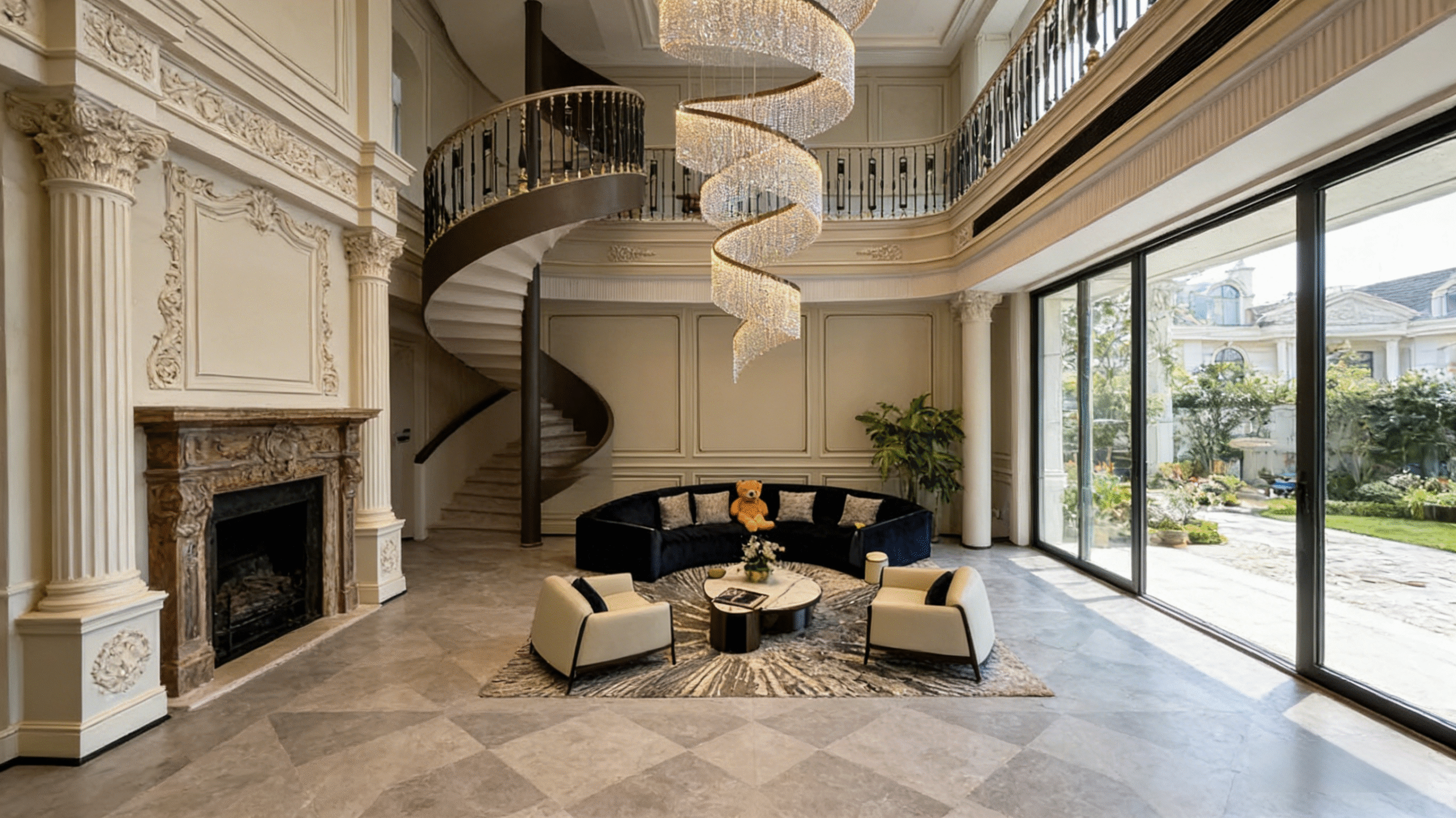
Large spaces demand proportionally scaled fixtures. For ceilings above 5 meters, consider large chandeliers or oversized pendants. Follow these guidelines for optimal sizing and placement:
- Measure room length and width in feet.
- Add these numbers together.
- Convert the sum to inches for the ideal fixture diameter.
- Hang chandeliers or pendants 7 feet from the floor minimum, adding 2-3 inches per extra foot above 8 feet.
- Over a table, choose a fixture half to two-thirds the table’s width.
Multi-tiered chandeliers can emphasize vertical space and create visual interest.
Dramatic Effects with Height
Use lighting to enhance the dramatic potential of double-height rooms:
| Technique | Description |
|---|---|
| Oversized Chandeliers | Make a bold statement and draw the eye upward. |
| Layered Lighting | Combine ambient, task, and accent lighting for warmth and depth. |
| Harnessing Shadows | Use indirect light to create depth and cinematic atmosphere. |
Statement vs. Subtle Lighting
Balance bold statement pieces (like a large chandelier) with subtle lighting (such as wall sconces or hidden LEDs). Use the main fixture as a focal point and supplement with smaller lights to highlight art or create cozy corners.
Step back and view your lighting from different angles to ensure visual balance and harmony.
Layered Lighting Design
Layered lighting combines ambient, task, and accent lighting to create a warm, balanced, and functional environment. This approach transforms double-height spaces into inviting and luxurious areas.
Ambient Lighting Solutions
Ambient lighting sets the overall mood. Use a mix of warm and cool tones to create the desired atmosphere. Highlight architectural features like staircases or artwork to enhance the interior design.
Tips for ambient lighting:
- Use a layered lighting scheme for mood and comfort.
- Select different light types for different areas (e.g., brighter in kitchens, softer in living rooms).
- Choose fixtures that complement your decor style.
- Incorporate accent lighting to highlight special features.
Steps for effective ambient lighting:
- Distribute light evenly to avoid dark corners.
- Mix multiple ambient light sources for richness.
- Use dimmers or smart controls for adjustable brightness.
| Benefit | Description |
|---|---|
| Energy Efficiency | Low-voltage ceiling lights reduce power consumption. |
| Targeted Lighting | Focus light where needed, avoiding wasteful illumination. |
Task Lighting for Function
Task lighting supports specific activities like reading or cooking. Use floor lamps, table lamps, or under-cabinet lights placed near seating or work areas.
Create intimate zones with strategically placed floor lamps (72-84 inches tall) to bring warmth to living areas.
| Lighting Type | Description |
|---|---|
| Ambient | Indirect lighting that softens shadows and reduces glare. |
| Accent | Highlights specific features like artwork or fireplaces. |
| Task | Focused, warm light for activities like reading. |
Accent Lighting Highlights
Accent lighting emphasizes architectural details, artwork, or textures. Techniques include:
- Uplighting for tall columns and walls to enhance height.
- Downlighting for a soft, moonlit effect on textured surfaces.
- Grazing lights to highlight brick or wood textures.
Layer Integration
Blend ambient, task, and accent lighting for a cohesive design. Use indirect uplighting (like cove LEDs) to soften shadows, eye-level lamps for warmth, and narrow-beam wall washers to emphasize vertical space.
Experiment with different lighting combinations. The right mix can transform your villa into a true showpiece.
Custom Lighting Fixtures
Chandeliers and Pendants
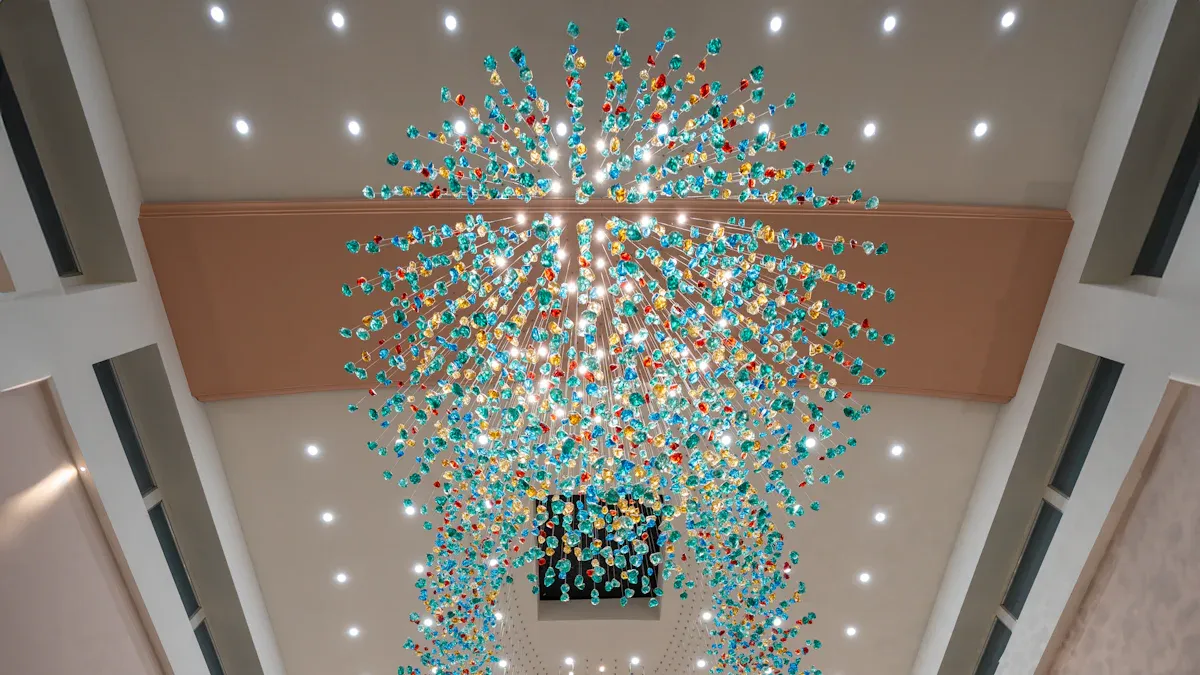
Custom chandeliers or oversized pendants make a dramatic statement in double-height spaces. Ensure the fixture size matches the room scale to avoid looking lost.
Statement chandeliers can turn your ceiling into a work of art.
Bespoke and Minimalist Designs
Minimalist designs with clean lines bring calm and elegance. Custom fixtures allow personal expression. Consider:
- Clean lines for a peaceful ambiance.
- Mixed metals for a modern touch.
- Sculptural lighting that doubles as art.
Materials and Finishes
Choose durable, low-maintenance materials for longevity. Options include sturdy metals and easy-clean glass. Select finishes that complement your decor and withstand trends.
Placement Tips and Mistakes
Proper placement is crucial. Hang fixtures at a height that fills the space without obstructing views. Avoid common mistakes:
| Common Mistake | Why It’s a Problem |
|---|---|
| Improper Scale | Small fixtures look lost in large rooms. |
| Over-reliance on a Single Light Source | Creates harsh shadows and uneven illumination. |
| Ignoring Medium Lighting | Lack of eye-level lighting makes spaces feel cold. |
| Treating Lighting as an Afterthought | Late planning can lead to design compromises and higher costs. |
Custom lighting can increase property value by enhancing spaciousness, warmth, and modernity.
Lighting Controls and Smart Integration
Dimming and Scenes
Dimmers allow adjustable brightness for different activities. Smart controls enable preset scenes (e.g., “entertaining,” “relaxing”) for instant mood changes.
Smart Home Features
Smart lighting systems offer remote control, color adjustment, scheduling, and motion sensing. Whole-home automation integrates lighting with other smart devices for enhanced comfort and modernity.
Ambiance and Efficiency
Smart lighting enhances ambiance while saving energy through automated schedules, dimming, occupancy sensors, and daylight harvesting.
| Feature | Benefit |
|---|---|
| Automated Schedules | Reduces unnecessary lighting use. |
| Dimming Capabilities | Saves energy by lowering brightness. |
| Occupancy Sensors | Turns lights off when rooms are empty. |
| Daylight Harvesting | Utilizes natural light to reduce electricity use. |
Customization and Maintenance
Working with Professionals
Lighting designers and architects ensure fixtures complement your space, style, and needs. They provide expertise in fixture selection, control systems, and energy efficiency, potentially increasing property value.
Personalization Tips
Customize lighting with unique materials, finishes, shapes, and sizes. Ensure fixtures match room scale and overall design style for a cohesive look.
Maintenance Planning
High ceilings pose maintenance challenges. Choose easy-clean fixtures with long-lasting bulbs. Consider motorized lifts or specialized tools for safe access. Schedule annual maintenance.
Transform double-height villas with layered lighting techniques:
| Lighting Technique | Purpose |
|---|---|
| Ambient Lighting | Creates a cozy, overall atmosphere. |
| Task Lighting | Provides focused light for activities. |
| Accent Lighting | Highlights architectural or artistic features. |
| Statement Lighting | Serves as a bold, luxurious centerpiece. |
Custom lighting enhances aesthetics, property value, and safety. For optimal results, consult lighting professionals.
FAQ
How do you choose the right chandelier size for a double-height room?
Add the room’s length and width in feet, then use that sum in inches as the ideal chandelier diameter. Adjust hanging height based on ceiling height.
Can you install smart lighting in older villas?
Yes. Smart bulbs or switches can often be integrated with existing wiring for modern control without major renovation.
What is the best way to clean high ceiling fixtures?
Use motorized lifts or extendable dusters. Choose easy-clean materials and schedule annual professional maintenance.
Do you need an electrician for custom lighting?
Yes. Licensed electricians ensure safe installation of heavy fixtures and complex control systems, protecting your home.