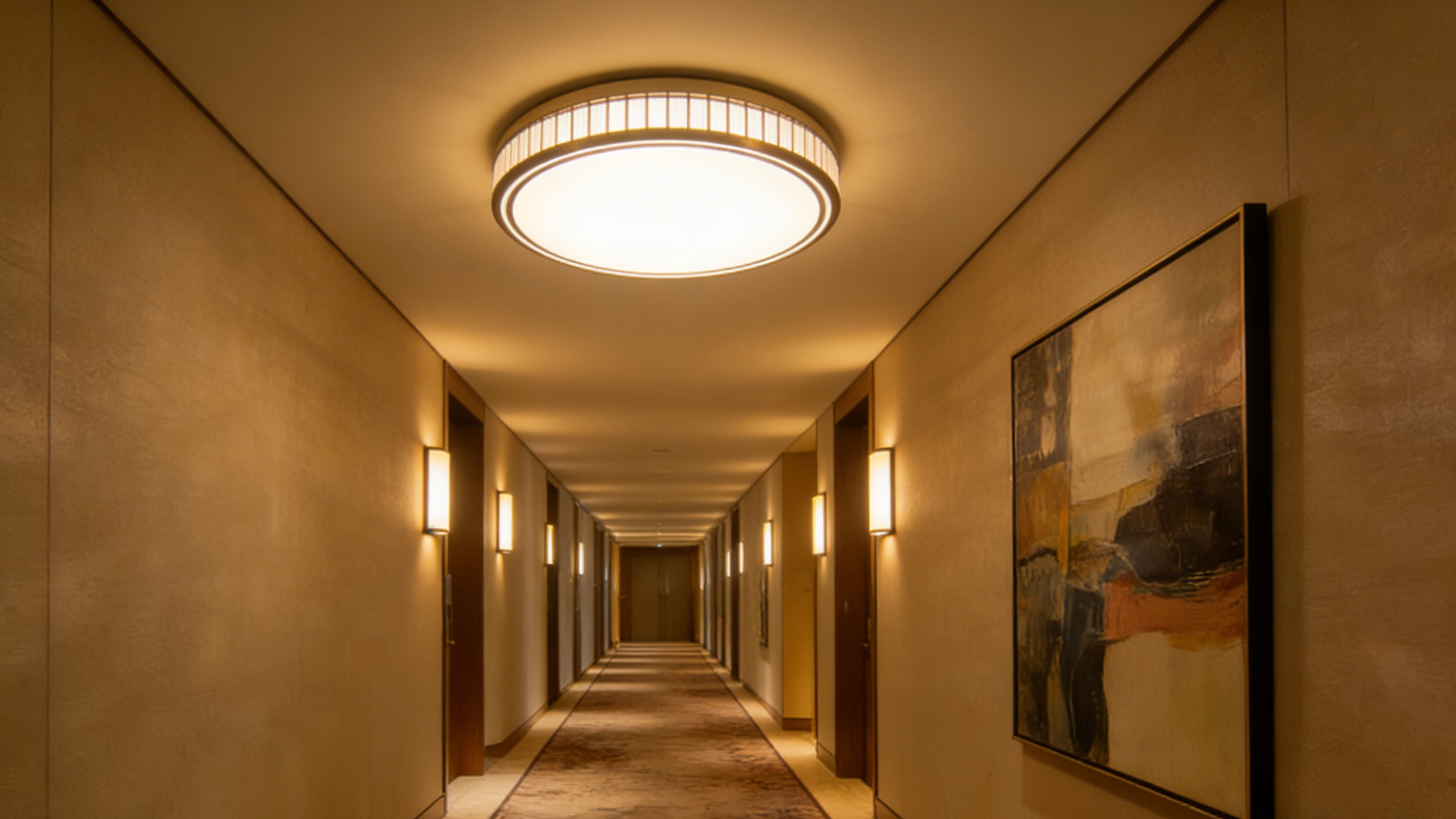
Managing lighting in high-traffic commercial spaces presents several challenges, including frequent usage and high maintenance costs. Durable lighting solutions address these issues by improving safety through enhanced visibility, reducing energy consumption, and minimizing repair frequency. LED lighting can reduce energy usage by up to 75% compared to traditional lighting, lowering utility expenses while providing long-lasting performance.
| Aspect | Impact |
|---|---|
| Safety | Enhanced visibility improves safety for all occupants |
| Energy Efficiency | LEDs significantly reduce energy consumption compared to traditional lighting |
| Maintenance Costs | Fewer replacements decrease lighting maintenance expenses |
Key Takeaways
- Durable lighting enhances safety through improved visibility, reducing accident risks in busy areas.
- LED lighting saves energy, using up to 75% less power than traditional bulbs, lowering electricity costs.
- LED fixtures offer extended lifespans, operating up to 50,000 hours and reducing replacement frequency.
- Impact-resistant lighting minimizes breakage and repair costs, ensuring consistent illumination in high-traffic zones.
- Regular inspections every 6-12 months maintain optimal performance and prevent potential issues.
Durable Lighting Features
When selecting lighting for high-traffic areas, prioritize features that ensure reliable performance and safety. Durable lighting withstands heavy usage, reduces costs, and maintains proper illumination. Understanding these characteristics is essential for informed decision-making.
Impact Resistance
High-traffic environments require lighting that withstands impacts and vibrations. Impact-resistant fixtures utilize durable materials and intelligent designs. Shatterproof bulbs with reinforced internal components and LED technology enhance resilience against physical shocks, making them suitable for hallways, warehouses, and industrial settings.
Benefits of impact-resistant lighting:
| Benefit | Description |
|---|---|
| Long Lifespan | Energy-efficient LEDs can operate for extended periods, reducing replacement frequency |
| Replaceable Components | Modular designs allow easy replacement of LED strips and drivers for simplified upgrades |
- Shatterproof bulbs provide extended service life
- LEDs maintain functionality after impacts
- Enhanced safety and reduced replacement needs
Long Lifespan
Durable lighting offers significantly longer operational life than conventional bulbs, reducing replacement frequency and associated costs. Commercial-grade LED lighting can last up to 50,000 hours, compared to approximately 1,000 hours for incandescent bulbs and 15,000 hours for fluorescent lighting.
- LED bulbs: Up to 50,000 hours
- Incandescent bulbs: Approximately 1,000 hours
- Fluorescent bulbs: Approximately 15,000 hours
Extended lifespans minimize replacement labor and material costs while preventing operational disruptions. For example, warehouses operating LED lighting 12 hours daily can exceed 10 years without requiring bulb replacements.
Energy Efficiency
Energy-efficient lighting reduces consumption and operational expenses. LED technology uses up to 75% less energy than traditional lighting, while smart controls and motion-activated systems optimize usage by adjusting illumination based on occupancy and natural light levels.
| Technology | Energy Savings | Lifespan |
|---|---|---|
| LED Lighting | Up to 75% less energy than incandescent lighting | Up to 25 times longer than incandescent |
| Smart Lighting Systems | Automated control and energy monitoring | Varies based on system configuration |
| Motion-Activated Lighting | Activates only when movement is detected | Varies based on usage patterns |
| Daylight Harvesting Systems | Adjusts based on natural light availability | Varies based on installation |
| High-Efficiency Fluorescent | More efficient than traditional fluorescent lighting | Improved lifespan compared to older technology |
- Commercial spaces can reduce energy costs by 30-50% through energy-efficient lighting upgrades
- LED technology can decrease electricity consumption by up to 90%
Low Maintenance
Durable lighting minimizes maintenance requirements through extended lifespans and reliable performance. LED technology and smart controls reduce repair frequency, supporting smooth operations in high-traffic environments.
Tip: Maintain service records and schedule regular maintenance reminders to identify potential issues before they escalate.
| Maintenance Task | Frequency | Purpose |
|---|---|---|
| Clean fixtures | Every 6-12 months | Maintains brightness and extends component life |
| Scheduled inspections | Every 6-12 months | Identifies minor issues before they become significant problems |
| Service record maintenance | Ongoing | Tracks repairs and plans future maintenance |
| Maintenance reminders | Ongoing | Ensures timely service completion |
LED traffic and street lighting controls further enhance reliability through extended lifespans and immediate fault notifications, enabling prompt repairs and consistent illumination.
Durable lighting reduces maintenance concerns, allowing more focus on core operations.
Types of Commercial Lighting
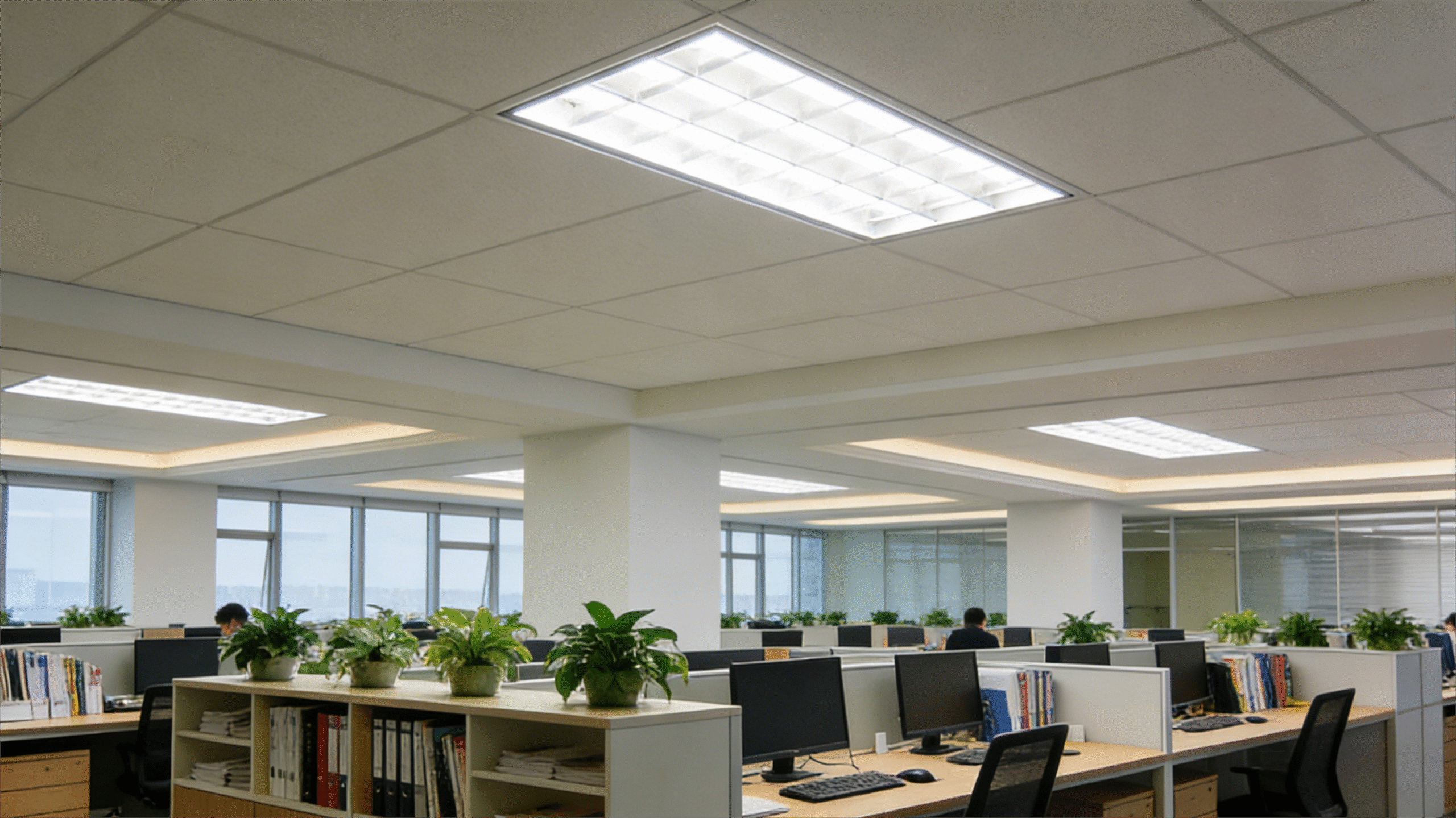
Selecting appropriate lighting for commercial applications is essential for safety and productivity. Each lighting type offers distinct advantages, with choices depending on space requirements and user activities.
LED Office Lights
LED office lighting provides bright, uniform illumination ideal for busy work environments. These fixtures enhance focus and comfort while offering energy efficiency and extended lifespan compared to traditional lighting.
| Feature | LED Lights | Other Commercial Lighting Types |
|---|---|---|
| Lifespan | Extended operational life | Shorter lifespan |
| Energy Efficiency | High energy efficiency | Generally lower efficiency |
| Durability | Designed for continuous operation | May not withstand constant use |
LED office lighting supports healthy circadian rhythms through adjustable color temperature settings, promoting alertness during daytime hours and relaxation in evenings.
High Bay and Warehouse Lights
High bay and warehouse lighting is designed for large, active spaces requiring powerful, uniform illumination for safety and productivity. Key features include:
- High-intensity illumination for large areas
- Excellent color rendering for visual clarity
- Adjustable color temperatures for various tasks
- Instant start-up and flicker-free operation
- Specialized designs to minimize glare
Performance characteristics of high bay and warehouse lighting:
| Feature | Benefit |
|---|---|
| High lumen output | Illuminates large areas for safe operations |
| Energy efficiency | Reduces operational costs and environmental impact |
| Long lifespan | Minimizes replacement frequency |
| Glare reduction | Prevents visual discomfort and eye strain |
| Uniformity | Eliminates dark spots for consistent visibility |
| Strategic placement | Directs illumination where needed most |
Wall Pack and Bollard Lights
Wall pack and bollard lighting is designed for exterior applications in parking lots, walkways, and building entrances. These fixtures provide:
- Enhanced safety through improved visibility
- Aesthetic appeal and architectural integration
- Energy efficiency through LED technology
- Durable construction minimizing maintenance
- Light pollution reduction through directional designs
Linear, Round, and Modular Fixtures
Linear, round, and modular lighting fixtures offer versatile solutions for various commercial applications. Linear lighting suits hallways and offices, round fixtures complement lobbies and conference rooms, while modular systems enable customized configurations for specific space requirements. These options support tailored lighting plans matching unique operational needs.
Tip: Implementing durable lighting throughout commercial spaces optimizes cost savings and safety. Select fixtures appropriate for each area’s specific requirements.
Choosing Lighting for High-Traffic Spaces
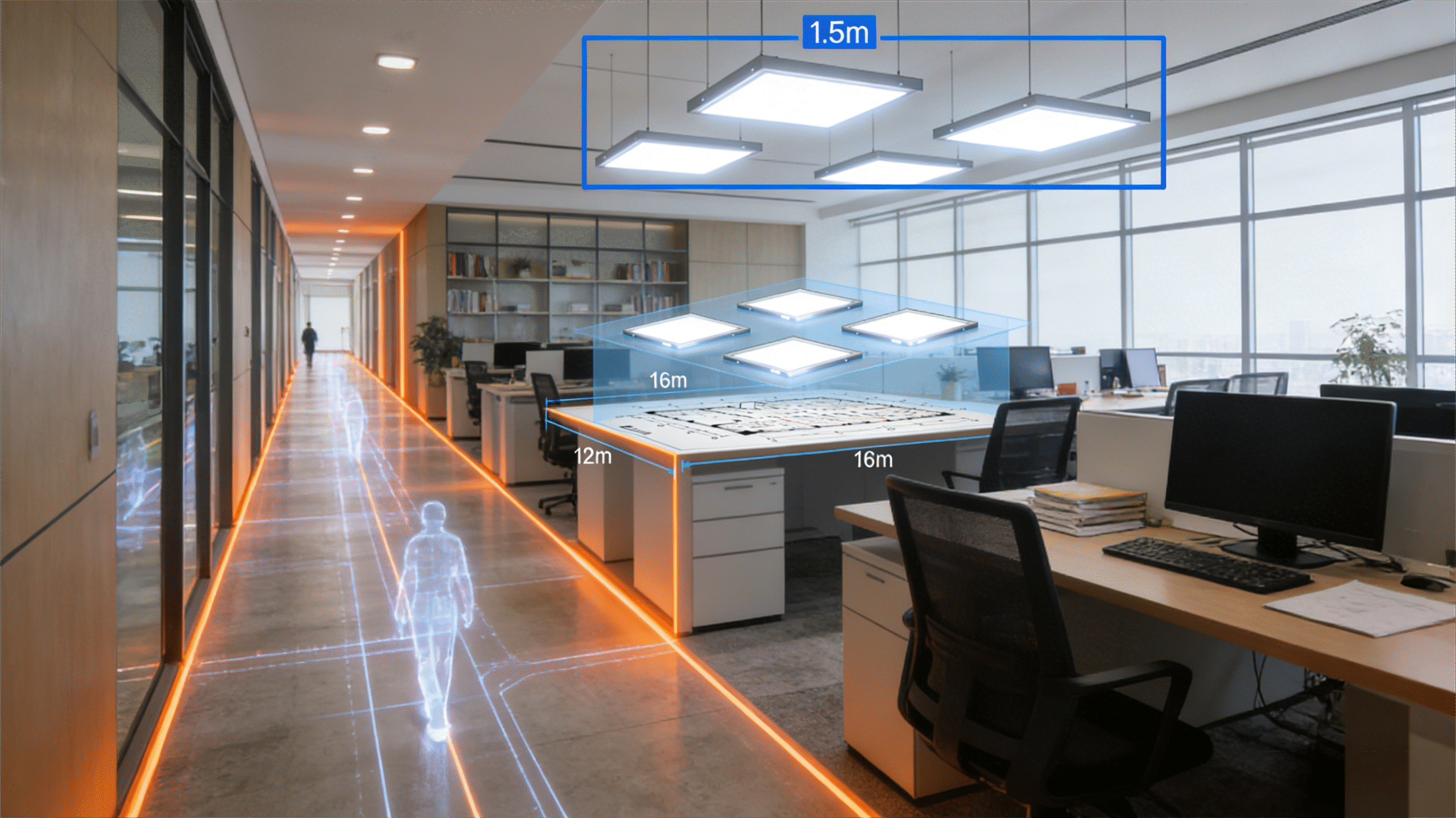
Assessing Environment Needs
Evaluate space characteristics before selecting lighting solutions. Consider these factors:
- Spatial Dimensions: Size and shape determine fixture quantity and placement
- Traffic Flow: Identify high-activity areas requiring enhanced illumination
- Functional Use of Each Room: Align lighting with space-specific activities
- Ceiling Characteristics: Height and reflectivity affect lighting requirements
- Wall Colors: Light surfaces enhance brightness, dark surfaces absorb light
- Accentuation Needs: Specialized lighting for signage or displays
- Consistency in Fixtures: Uniform appearance and illumination distribution
Consider business type when selecting lighting. Different environments have distinct requirements:
| Environment Type | Key Lighting Requirements | Purpose |
|---|---|---|
| Retail | High Color Rendering Index (CRI) | Enhances product appearance and customer attraction |
| Office | Energy efficiency and aesthetics | Supports productivity and creates appealing workspaces |
| Industrial | Safety compliance and hazardous location lighting | Ensures safe operations in challenging environments |
Safety and Compliance
Lighting selection must comply with safety regulations to ensure occupant protection and legal adherence. Key standards include:
| Standard Type | Description |
|---|---|
| OSHA Standards | Requires adequate illumination in work areas, exits, and hazardous zones |
| ADA Compliance | Ensures lighting supports accessibility for individuals with visual impairments |
| Energy Code Compliance | Follows IECC and ASHRAE standards for energy conservation |
| Emergency Lighting Requirements | Mandates emergency lighting and exit signage for safe evacuation during power failures |
Note: Emergency lighting must provide at least 90 minutes of illumination during power outages. Regular testing ensures proper functionality.
Recommended illumination levels for different areas:
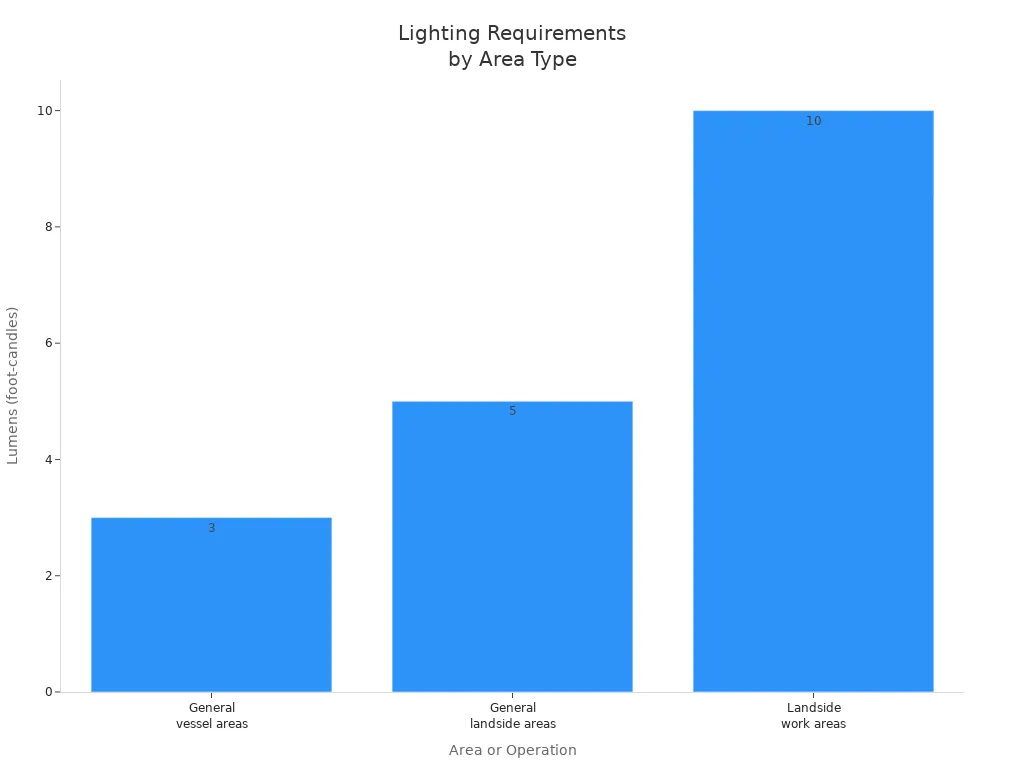
General lighting level guidelines:
| Lumens (foot-candles) | Area or Operation |
|---|---|
| 3 | Hallways, exits, stairs, walkways |
| 5 | Corridors, exits, stairs, walkways, general work areas |
| 10 | Machine shops, equipment rooms, warehouses, outdoor work areas |
Installation Factors
Consider these elements for optimal lighting performance and longevity:
- Maintenance: Develop scheduled inspection and cleaning protocols
- Energy Efficiency: Implement LED lighting and smart control systems
- Regulatory Compliance: Adhere to safety and energy regulations
- Smart Lighting Systems: Utilize sensors and timers for automated control and energy optimization
Tip: Position fixtures for easy access to simplify maintenance and cleaning procedures.
Cost of Ownership
Evaluate total ownership costs beyond initial purchase prices, including installation, operation, and maintenance expenses. Durable lighting may involve higher upfront investment but delivers long-term savings through reduced energy consumption and maintenance. Minimized downtime from fewer replacements further enhances operational efficiency.
- Select long-lasting fixtures to reduce replacement frequency
- Choose energy-efficient options to lower operational expenses
- Plan for accessible maintenance to decrease repair costs
Comprehensive consideration of these factors supports informed decision-making for commercial lighting solutions that enhance safety, reduce costs, and improve space functionality.
Installation and Maintenance Best Practices
Proper Setup
Establish durable lighting foundations through careful initial planning. Select energy-efficient LED fixtures with high lumens per watt for optimal illumination with reduced power consumption. Incorporate lighting controls including occupancy sensors and dimmers to conserve energy by adjusting illumination based on occupancy. Design lighting plans aligned with specific area requirements, following IES recommendations to avoid over-illumination. Utilize natural light through windows or skylights where possible to reduce energy usage and enhance occupant wellbeing.
Tip: Select fixtures with easily replaceable components to simplify repairs and maintain consistent illumination.
Routine Checks
Regular inspections maintain lighting system performance. Examine fixtures periodically to identify potential issues early. Remove dust and debris from fixtures to prevent heat buildup and maintain optimal light output. Replace malfunctioning bulbs promptly to preserve system balance and prevent additional component stress.
Basic maintenance checklist:
- Inspect all fixtures for damage or loose components
- Clean lenses and covers to remove accumulated dust
- Replace non-functioning bulbs immediately
- Verify proper sensor and control responsiveness
Troubleshooting
Address common lighting issues through systematic approaches. For flickering problems, replace bulbs with compatible LEDs and check for loose connections. If lights appear dim or exhibit color shifts, clean lenses or replace components as needed. Reposition fixtures to eliminate dark spots when necessary.
For complex issues, consult lighting professionals to assess potential wiring problems or component failures. Field-adjustable fixtures allow customization of color temperature and brightness to match specific area requirements.
Note: Maintain detailed repair and modification records to identify patterns and plan future upgrades effectively.
Durable Lighting Success Stories
Retail and Office Upgrades
Lighting upgrades in retail and office environments deliver significant improvements. LED system implementations typically achieve energy savings and cost reductions, with return on investment often realized within three years. Enhanced illumination improves occupant satisfaction and space aesthetics.
| Benefit | Description |
|---|---|
| Energy Savings | Upgrading can reduce energy consumption by up to 75% |
| Payback Period | Return on investment typically achieved within three years |
| Improved Occupant Satisfaction | Enhanced lighting quality and aesthetics increase comfort and property value |
- Reduced maintenance costs from extended LED lifespans
- Daylight integration promotes occupant wellbeing
- Increased natural light exposure enhances mood and productivity
Tip: Appropriate lighting selection creates welcoming environments that support productivity and comfort.
Healthcare and Public Spaces
Healthcare facilities and public buildings require safe, well-lit environments. Durable lighting supports health and safety through high-CRI LED panels that create calming atmospheres and aid patient recovery. Proper illumination supports infection control and staff performance.
- Enhanced wellbeing and functionality in public spaces
- Smart lighting controls optimize energy use and comfort
- Well-lit entrances improve safety in healthcare facilities
- Appropriate color temperatures in patient rooms promote relaxation
- Thoughtful design minimizes glare and visual discomfort
Note: Energy-efficient lighting reduces operational expenses while supporting environmental sustainability.
Warehouses and Outdoor Areas
Warehouses and outdoor spaces require robust, reliable lighting. Transitioning from fluorescent to LED lighting can reduce power consumption by up to 70%, while improving accuracy and task completion rates. Enhanced illumination decreases accident frequency and enhances safety.
- Improved outdoor lighting can significantly reduce nighttime incidents
- Energy cost reductions up to 40% achievable
- Enhanced brightness increases perceived safety
Durable lighting delivers measurable benefits including cost savings, safety improvements, and enhanced environmental quality.
Durable lighting creates safer, brighter environments while preventing accidents in high-traffic areas. Energy-efficient LEDs provide over 50,000 hours of operation with minimal maintenance requirements. To achieve optimal results, follow these steps:
- Evaluate current lighting systems and establish clear objectives
- Select products meeting specific needs and safety standards
- Collaborate with experts to develop space-appropriate lighting plans
Effective lighting enhances customer experiences and supports daily business operations.
FAQ
What makes lighting “durable” for commercial spaces?
Durable lighting incorporates robust materials and intelligent designs that withstand physical impacts and extended operation. These fixtures require less frequent maintenance and perform reliably in high-traffic environments, delivering long-term cost savings.
How do LEDs help lower energy costs?
LEDs consume significantly less electricity than traditional lighting, potentially reducing energy expenses by up to 75%. Their extended lifespan further decreases replacement frequency and associated costs.
Can durable lighting improve safety?
Yes. Consistent, high-quality illumination enhances visibility, reducing accident risks and creating safer environments. Emergency lighting provides essential guidance during power interruptions.
How often should you check commercial lighting?
Inspect commercial lighting systems every 6-12 months. Regular maintenance identifies potential issues before escalation while cleaning and component replacement maintain optimal brightness and safety.