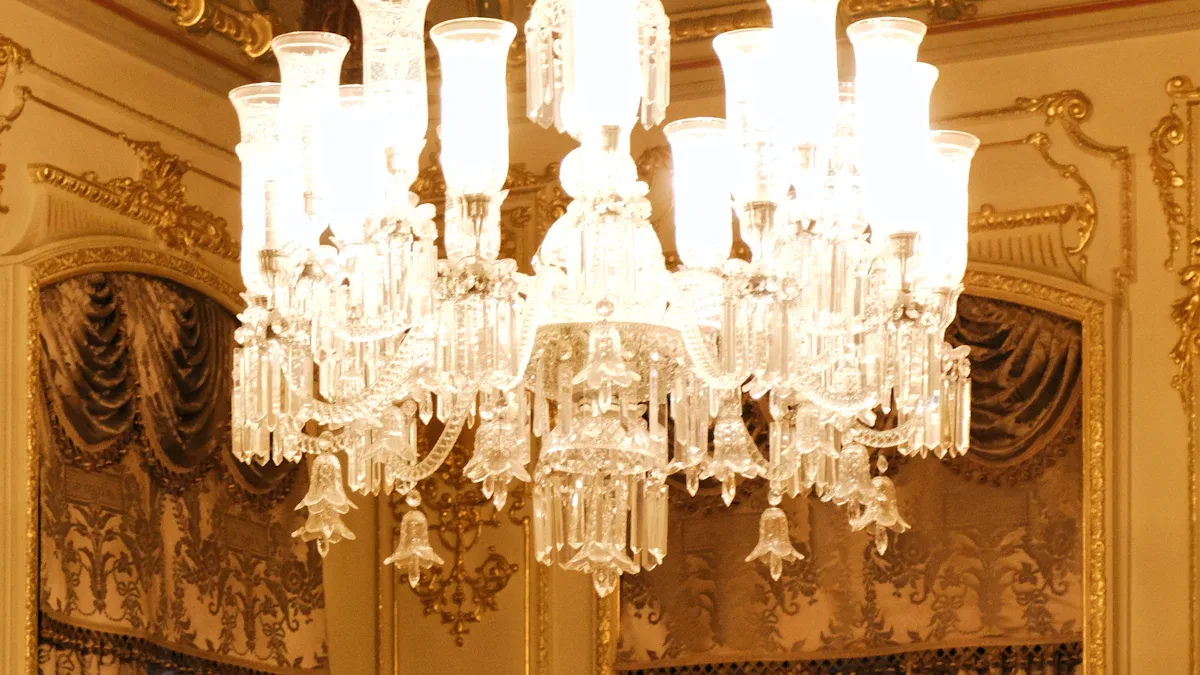
Image Source: pexels
Chandeliers have shown luxury and creativity for over 800 years. They changed with shifts in art, culture, and technology. At first, they were simple but became detailed as new materials and lights appeared. Electric light bulbs changed how they worked. Old European styles stayed popular. In the late 1900s, chandeliers became less common. Later, they made a comeback, mixing classic beauty with modern designs. Their lasting charm shows people’s love for beauty and new ideas.
Key Takeaways
- Chandeliers have changed over 800 years, showing shifts in art and culture.
- Early chandeliers were plain wood or metal, showing wealth in medieval homes.
- Electric lighting changed chandeliers, making them more detailed and useful.
- Today’s chandeliers are simple and creative, using eco-friendly materials and LED lights.
- Chandeliers are still loved, mixing old beauty with modern styles for home decor.
The Origins of the Chandelier: Medieval and Gothic Beginnings
Early Wooden and Metal Chandeliers
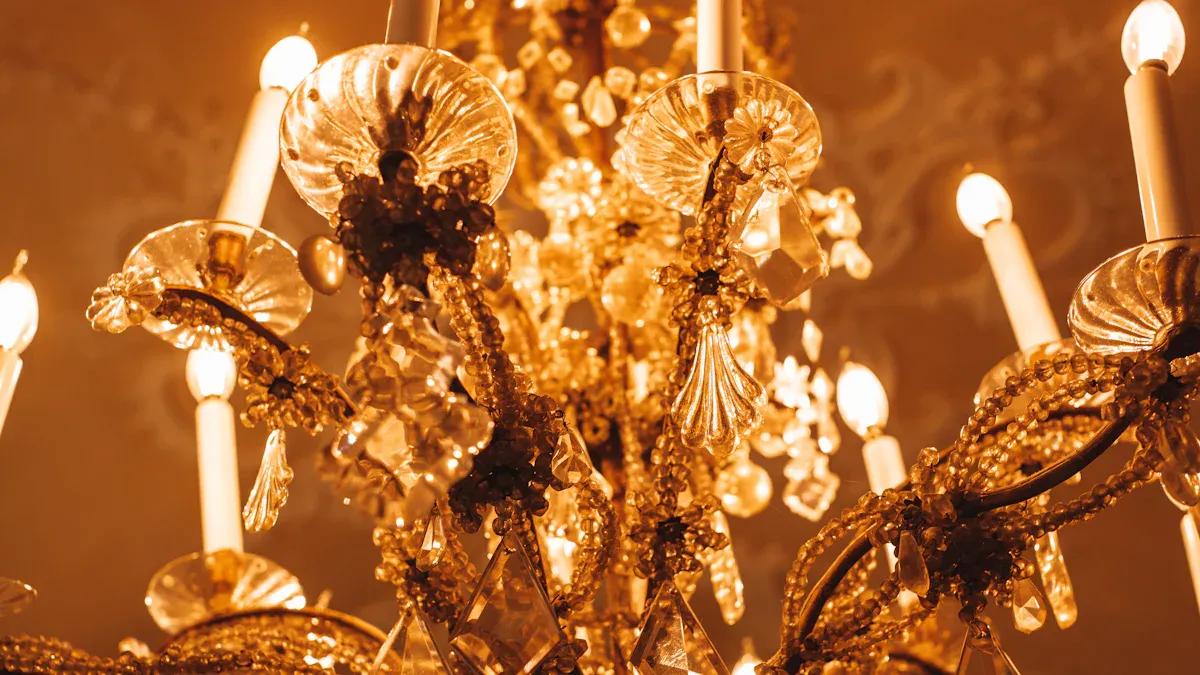
Chandeliers first appeared in medieval times for light and status. Early ones were simple, made from wood or metal. Wealthy homes, like King Charles VI’s court, used wooden cross-beam chandeliers in the 15th century. Brass chandeliers became popular for their strength and beauty. Dutch and Flemish paintings often showed brass chandeliers, linking them to luxury.
Rich materials like gilded metals and carved wood showed wealth. These materials also helped spread light evenly in big rooms. Chandeliers were both decorative and useful in aristocratic homes.
| Type of Chandelier | Description | Historical Context |
|---|---|---|
| Corona | Circular crown-shaped hanging devices made of iron | Used in religious buildings since the 9th century |
| Romanesque Wheel | Larger circular wheel chandeliers | Recorded in Germany, France, and the Netherlands in the 11th and 12th centuries |
| Wooden Cross-beam | Early form used in domestic settings | Found in wealthy households, including the court of Charles VI in the 15th century |
| Brass Chandelier | Made with brass-type alloy | Commonly depicted in Dutch and Flemish paintings from the 15th to 17th centuries |
Gothic Influences on Design and Function
The Gothic era changed chandelier designs to look grander and work better. Gothic styles added arches, circles, and detailed patterns to chandeliers. These features made them more beautiful and matched the fancy spaces they lit.
Dark woods like mahogany and walnut became popular for their strength and style. Wrought iron added Gothic flair and made chandeliers sturdy. Some designs used stained glass, creating colorful lights that brightened rooms.
Gothic chandeliers used shadows and rich colors for dramatic effects. Even simple designs showed Gothic ideas, proving its flexibility. Chandeliers became key features in Victorian Gothic homes, blending art and function.
Symbolism in Religious and Noble Spaces
In medieval and Gothic times, chandeliers had special meanings in churches and noble homes. In places of worship, they symbolized light and divine guidance. The corona chandelier, shaped like a crown, was important in religious buildings.
By the 15th century, chandeliers showed wealth and power for nobles and clergy. Made from costly materials like bronze and iron, they were luxury items. Skilled workers crafted them to decorate castles and cathedrals.
Church art inspired “noble simplicity,” which influenced chandelier designs. This style focused on elegance and meaning, fitting spiritual values. Chandeliers in churches balanced beauty and purpose, lighting spaces while symbolizing divinity and authority.
The Renaissance and Baroque Periods: A New Era of Elegance
The Rise of Rock Crystal Chandeliers
In the Renaissance, chandeliers became more than just lights. Wealthy people wanted designs that showed their status and taste. Rock crystal chandeliers became a sign of wealth, with detailed designs and shiny crystals. These chandeliers often had nature-inspired shapes like flowers and soft curves.
Rock crystal made lighting look magical. It bent light to create sparkling effects, lighting up big halls beautifully. Skilled workers shaped and polished each crystal to make them look perfect. This change turned chandeliers from simple tools into fancy decorations.
Maria Theresa Chandeliers and Their Importance
Named after Empress Maria Theresa of Austria, these chandeliers were famous in the Baroque era. They had glass arms and crystal decorations, making them shiny and elegant. Unlike older styles, these chandeliers focused on balance and beauty, matching the rich tastes of the time.
They were often found in royal homes and theaters, showing power and class. Even today, Maria Theresa chandeliers inspire modern designs. They mix old-fashioned beauty with new materials, keeping their charm alive.
Renaissance Art and Culture’s Impact on Chandeliers
The Renaissance brought new ideas and creativity, changing chandelier designs.
- Brass chandeliers had detailed carvings, showing the art of the time.
- Lead crystal improved how light sparkled, making chandeliers fancier.
- Murano glassmakers used old methods to make stunning glass chandeliers.
- Guiseppe Briati, a famous Murano artist, tried new glass styles to compete with others.
- Techniques like vetro a filigrana mixed old traditions with fresh ideas, showing Renaissance creativity.
These changes made chandeliers both useful and artistic. The mix of materials, skill, and culture shaped the unique chandelier styles of this period, leaving a lasting mark on lighting design.
The Evolution of Chandeliers in the 18th and 19th Centuries
Neoclassical and Georgian Styles
In the 18th century, the neoclassical style took ideas from ancient Greece and Rome. This style focused on simple designs, clean shapes, and balance. Chandeliers became elegant with patterns like laurel leaves and geometric shapes.
During the Georgian period, chandeliers became more detailed and stylish. Designers like William Parker added neoclassical touches and maker stamps. Georgian chandeliers mixed old-fashioned designs with new crafting methods, creating a blend of tradition and innovation.
| Period/Style | Key Features |
|---|---|
| Georgian Period | William Parker’s designs had neoclassical details and maker stamps. |
| Neoclassicism | Inspired by Greece and Rome; clean lines and classical shapes. |
Victorian Innovations and Gas Lighting
The Victorian era brought big changes to chandeliers and lighting. Gas lighting replaced candles, leading to “gasoliers.” These were simpler but very useful. They showed how technology could change design.
Victorian chandeliers used new materials like brass and cast iron. These were strong and affordable, making chandeliers available to more people. Gas lighting made rooms brighter and chandeliers more practical for everyday use.
Tip: Victorian chandeliers showed how new inventions could make lighting better and more affordable.
The Rise of Glass Chandeliers in Europe
In the late 18th century, glass-making improved, changing chandelier designs. Lead crystal became popular, making chandeliers sparkle and shine. These designs turned lighting into art, lighting up large spaces beautifully.
Italian Murano glassmakers were key in creating unique chandeliers. They used bright colors and detailed designs, making chandeliers symbols of luxury. These glass chandeliers decorated palaces and theaters across Europe.
| Period | Design Features | Lighting Source |
|---|---|---|
| 5th to mid-18th | Simple candle-based designs, like girandoles or candelabras. | Animal fats, later candles |
| 18th Century | The word ‘chandelier’ became common; designs got fancier. | Candles |
| Late 18th | Glass-making improved; lead crystal chandeliers became popular. | Candles |
| Victorian Era | Gas lighting introduced; simpler designs called ‘gasoliers’ emerged. | Gas |
Chandeliers in this time combined art and technology. From neoclassical beauty to Victorian usefulness, they adapted to new trends and ideas, staying timeless.
The Industrial Revolution and the Modernization of Chandelier Lights
Art Nouveau and Natural Shapes
The Industrial Revolution changed how chandeliers looked and worked. Art Nouveau became a popular style, focusing on nature-inspired designs. Designers used flowing lines, flower shapes, and detailed patterns. This style moved away from straight, geometric designs to more artistic ones.
Art Nouveau chandeliers were made with materials like iron, bronze, and glass. Skilled workers crafted these into delicate, handmade pieces. Stained glass was often used, adding bright colors and elegance. These chandeliers lit up rooms while also being beautiful decorations.
During this time, the growing middle class wanted fancy lighting. More people could afford chandeliers to show off their wealth. Factories made production faster, so these detailed designs became easier to buy.
Art Deco and Bold Shapes
After Art Nouveau, Art Deco became the new trend in the early 1900s. This style used bold shapes, symmetry, and a modern look. Chandeliers became both useful and stylish, matching the sleek vibe of the time.
Art Deco chandeliers used materials like chrome, nickel, and glass. Designers created striking pieces with rectangles, triangles, and circles. Patterns like chevrons and stepped designs added elegance. These chandeliers were perfect for dining rooms and theaters, making spaces look grand.
Art Deco wasn’t just about looks. It brought modern chandeliers that mixed old charm with new ideas. Designs with crystals and layered shapes became popular. These chandeliers combined beauty with practical lighting.
Electric Lighting Changes Chandelier Design
Electric lighting, introduced during the Industrial Revolution, changed chandeliers forever. Unlike candles or gas, electric lights were reliable and bright. This let designers create more detailed and useful chandeliers.
Inventors like Humphry Davy and Lewis Latimer helped make electric lights common. Their work inspired chandeliers that mixed art with technology. After the Glass Excise Act ended in 1835, chandelier production increased. New styles like the tent-and-bag chandelier, with cascading crystals, became popular.
Electric lights also changed how chandeliers fit into buildings. Homes and public spaces started using electric chandeliers instead of older lighting. This allowed for more creative and decorative designs. Daniel Swarovski’s crystal cutting machine made crystals cheaper and easier to get, improving chandelier designs.
The Industrial Revolution was a big moment for chandeliers. From Art Nouveau’s natural beauty to Art Deco’s bold shapes, chandeliers adapted to new trends. Electric lighting made them more modern, blending timeless style with new technology.
Contemporary Trends and the Future of Chandelier Design
Simple and Artistic Modern Styles
Today’s chandeliers focus on simplicity and creativity. Minimalist designs use clean shapes and simple beauty. Sculptural chandeliers turn lights into artistic pieces. Many designers look to nature for ideas, creating shapes like leaves or branches. Others make moving designs, inspired by mid-century styles, to add interest to rooms.
Materials like concrete and raw metals give chandeliers a modern, industrial feel. Futuristic LED designs mix new technology with bold, geometric shapes. These trends show how chandeliers can be both useful and decorative.
| Trend | Style Idea | Famous Designers |
|---|---|---|
| Nature-inspired | Biophilic | Kenneth Cobonpue, HENGE |
| Moving Designs | Mid-century | David Weeks Studio |
| Industrial Materials | Modern Look | Apparatus Studio |
| Futuristic LEDs | Futurism | Moooi, Artemide |
LED Lights and Green Materials
LED lights have changed how chandeliers are made. They save energy, cut costs, and last longer. Many makers now use recycled materials and eco-friendly methods to create LED chandeliers. This matches the growing focus on protecting the environment.
Green materials are important in today’s chandeliers. Bamboo, rattan, and wood are natural and eco-friendly. Recycled glass and metal are both beautiful and sustainable. New materials like biodegradable plastics and hemp offer even greener options.
- Green chandeliers attract buyers who want stylish, eco-friendly decor.
- LED lights save energy and meet government standards.
- Recycled materials look great and help the planet.
Chandeliers in Today’s Homes
Chandeliers are still a favorite for making homes look fancy. The global chandelier market, worth $8.20 billion in 2024, is growing steadily. This shows people want stylish and luxurious home decor.
As incomes rise, more people renovate their homes, often adding chandeliers as standout pieces. Modern chandeliers use LED lights, offering energy-saving options for eco-conscious buyers. They combine classic beauty with modern features, fitting into any home style.
Note: With new materials, advanced tech, and creative designs, chandeliers remain both useful and beautiful in today’s homes.
The story of chandeliers shows changes in art and design. Over time, they went from simple wood frames to fancy styles like Venetian and French Baroque chandeliers. Each era brought new materials and looks, from Rococo beauty to modern crystal designs. Chandeliers have always been useful and beautiful, lighting rooms while showing luxury. They are still a symbol of style, mixing old craftsmanship with new ideas. Their charm comes from adapting to trends while keeping their rich history alive.
Chandeliers show how lighting can be both useful and artistic, connecting past and present with grace.
FAQ
What is the purpose of a chandelier?
A chandelier lights up a room and adds decoration. It makes spaces look nicer while giving light. Designers use them to make rooms stand out.
How have chandeliers evolved over time?
Chandeliers started as simple wood frames but became fancy. Materials like glass and crystal made them prettier. Gas and electric lights changed how they worked and looked.
Are modern chandeliers energy-efficient?
Yes, many modern chandeliers use LED lights. LEDs save energy and last longer. They often use eco-friendly materials, making them better for the planet.
What materials are commonly used in contemporary chandeliers?
Modern chandeliers use recycled glass, metal, bamboo, and concrete. Some also use biodegradable plastics and natural fibers for green designs.
Can chandeliers fit into small spaces?
Yes, small chandeliers are made for tiny rooms. Designers create simple and stylish ones that look nice without taking up much space.