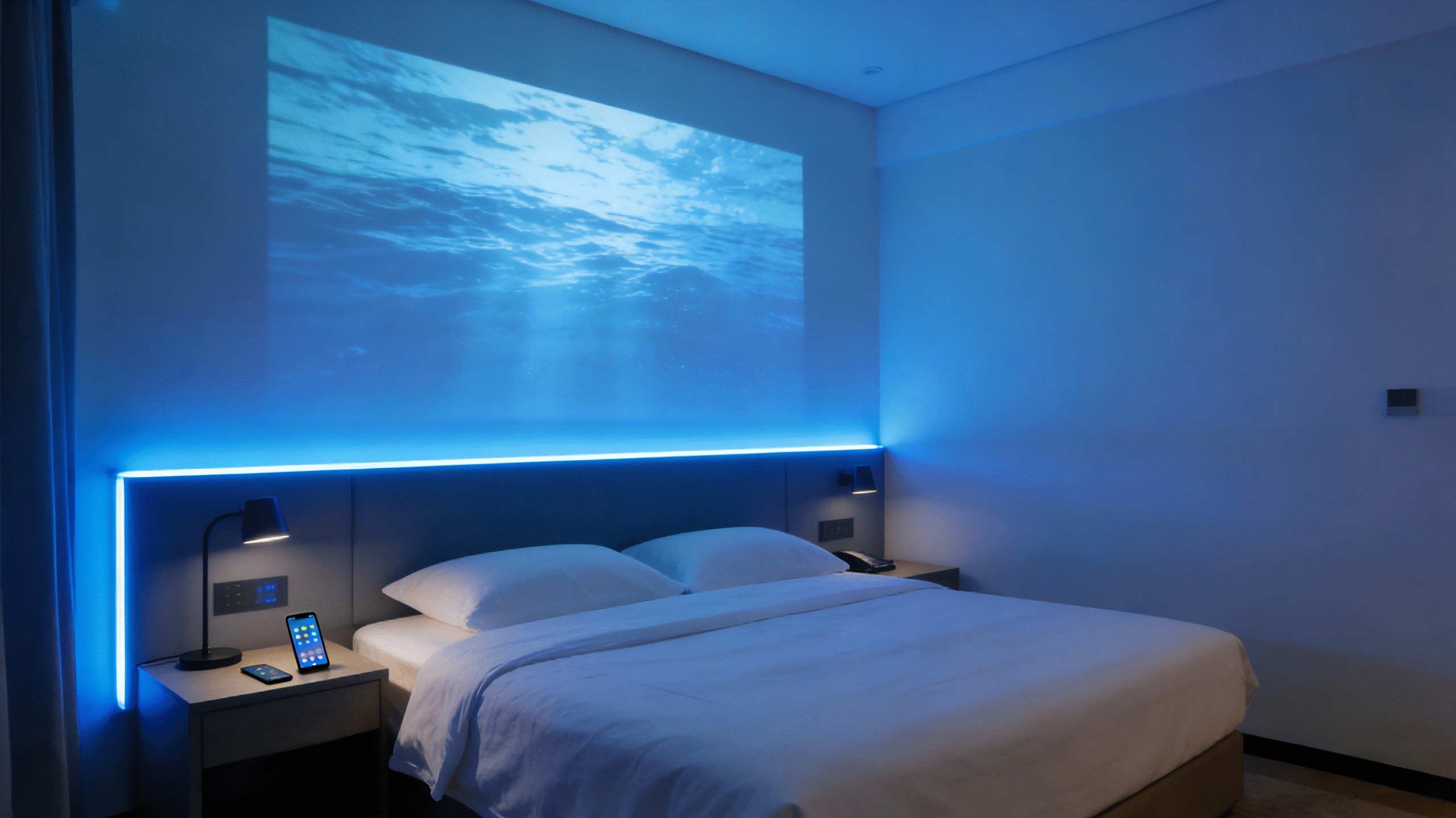
Imagine walking into your hotel room where the future of hospitality is already present. You can adjust the lighting with your voice or smartphone, selecting the ideal illumination for relaxation or work. The room adapts instantly, demonstrating how personalized lighting provides control and enhances your stay. Smart technology not only simplifies operations but also elevates guest satisfaction and helps hotels differentiate themselves. Here is how these innovations are transforming hospitality:
- Smart room technology, including intelligent lighting, significantly increases guest satisfaction in hotels.
- These technologies offer greater convenience and personal choice.
- Higher satisfaction ratings result from automated lighting and other smart solutions.
Have you considered how these innovations could enhance your guests’ experience?
चाबी छीनना
- Smart lighting enhances guest happiness by allowing brightness and color adjustments, creating a cozier stay.
- Personalized lighting makes guests feel valued, leading to positive reviews and repeat visits.
- Sustainable lighting, such as LED technology, reduces energy consumption, saving costs and benefiting the environment.
- Human-centric lighting aligns with natural circadian rhythms, improving guest well-being.
- Integrated smart systems work with trained staff to deliver seamless guest experiences.
Lighting’s Impact in Hospitality
Ambiance & Comfort
The mood of a hotel is apparent from the moment you enter. Lighting significantly influences how you perceive and experience a space. Bright illumination can promote alertness and readiness, while softer lighting encourages relaxation. When you can control room lighting, you feel more comfortable and at home.
Research highlights the relationship between lighting and guest comfort:
| मुख्य निष्कर्ष | Implications for Guest Comfort |
|---|---|
| Visual elements account for 98.2% of perceptual evaluation factors in destination selection. | Visual comfort is crucial in hotel design. |
| Higher illuminance levels reduce fatigue and anxiety. | Proper lighting promotes relaxation. |
| User-controlled lighting systems improve customer satisfaction. | Guests appreciate adjusting their own lighting. |
| Wall color affects customer perception; blue is often preferred. | Color choices impact comfort levels. |
| Interaction between senses shapes overall perception. | Lighting should complement other sensory elements. |
Lighting does more than illuminate spaces. It shapes emotions and behaviors. Different settings require varied lighting approaches. For instance, warm, gentle lighting suits lounges, while brighter lighting fits gyms. Hotels that offer lighting control demonstrate care for guest preferences.
- Guests form impressions of hotels within seconds of entering the lobby.
- Lighting influences expectations and overall satisfaction.
- Warm lighting works well during quiet periods, while cooler lighting suits active environments.
Brand Identity & Lighting
Lighting communicates a hotel’s brand identity. Color and brightness can evoke excitement, calmness, or exclusivity. Effective lighting creates a unique atmosphere aligned with brand values. Memorable hotels often feature distinctive lighting schemes, whether bold and colorful or soft and elegant.
Lighting affects color perception and spatial awareness, influencing how guests perceive both the space and the hotel brand. When lighting aligns with brand aesthetics, it enhances perceived value and creates memorable experiences.
Key Trends in Hospitality Lighting
Smart Lighting & IoT
Smart lighting has become standard in hotels. These systems enhance convenience and comfort, allowing guests to adjust brightness and color via smartphone or voice commands. This personalization helps guests feel at home and set desired moods.
Over the past five years, hotels have transitioned from conventional lighting to smart, IoT-enabled systems using energy-efficient LED technology. These systems offer greater control while reducing electricity costs. Smart lighting integrates with other hotel systems, improving operational efficiency and personalization.
Current hospitality lighting trends include:
- Personalized, immersive experiences through dynamic lighting
- Increased focus on sustainability and energy efficiency, with LED as the preferred technology
- Remote-controlled lighting that enhances convenience and energy conservation
- Integration of IoT with building management systems to improve guest experience and operations
- Popularity of minimalist, sustainable designs featuring sleek lighting fixtures
Human-Centric Design
Lighting impacts emotional and physiological states. Human-centric lighting focuses on well-being, aligning with natural circadian rhythms to enhance guest health and comfort.
| Aspect of Lighting Design | Effect on Guest Well-Being |
|---|---|
| वैयक्तिकरण | Significant impact on mood, comfort, and satisfaction |
| Warm Light Temperatures | Associated with melatonin production and improved sleep |
| Cooler Light Temperatures | Enhances alertness and cognitive performance |
| Sustainable Lighting Practices | Reduces harshness and supports circadian rhythms |
| Guest Preferences | Importance of natural light and warm tones for well-being |
Warm, gentle lighting creates calming environments conducive to rest, while bright, cool lighting promotes focus in meeting spaces. Hotels implementing human-centric lighting demonstrate commitment to guest health and satisfaction.
Sustainable Solutions
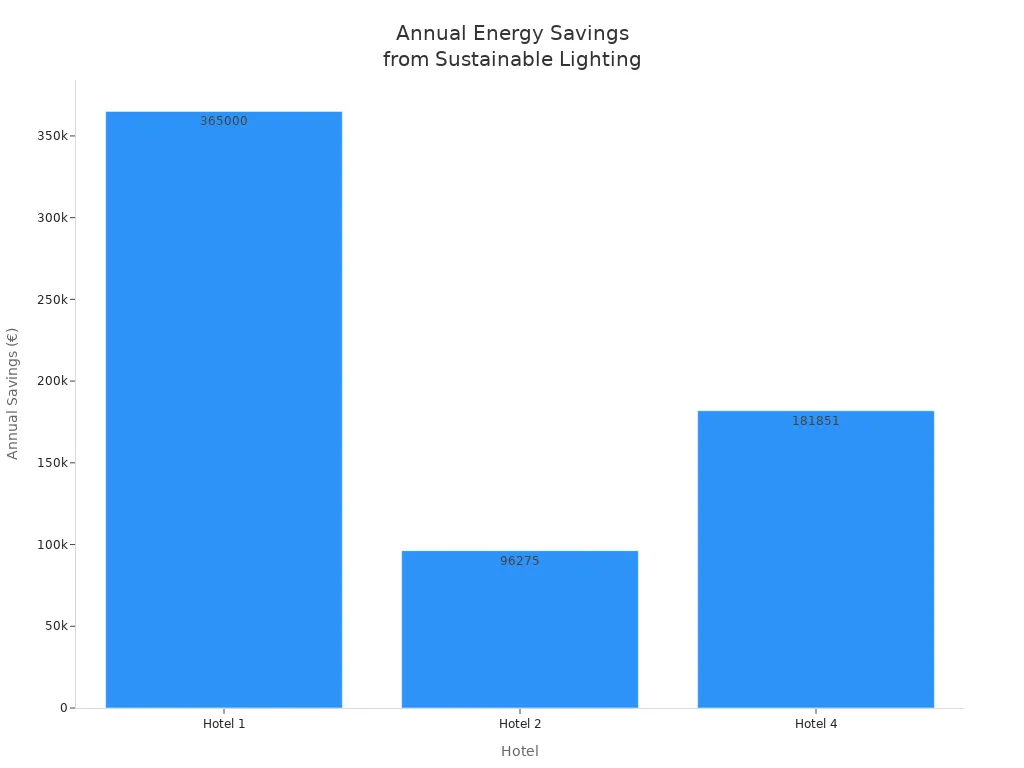
Sustainability is a major trend in hospitality. Hotels increasingly adopt LED lighting for its energy efficiency and longevity, reducing both environmental impact and operational costs.
| Hotel | ऊर्जा की बचत | Payback Period |
|---|---|---|
| Hotel 1 | €365,000 annual savings | 6.5 years |
| Hotel 2 | €96,275 annual savings | 6.1 years |
| Hotel 3 | €22,000 in grants, 4.8 years payback | Not applicable |
| Hotel 4 | €181,851 annual savings | 5.7 years |
Benefits of sustainable lighting include:
- LED lights consume significantly less power, reducing electricity bills
- Energy savings in high-traffic areas like lobbies and hallways
- Longer bulb lifespan, decreasing replacement costs
Guests staying at hotels with sustainable lighting contribute to environmental conservation while enjoying enhanced accommodations.
Personalization Strategies
Custom Room Controls
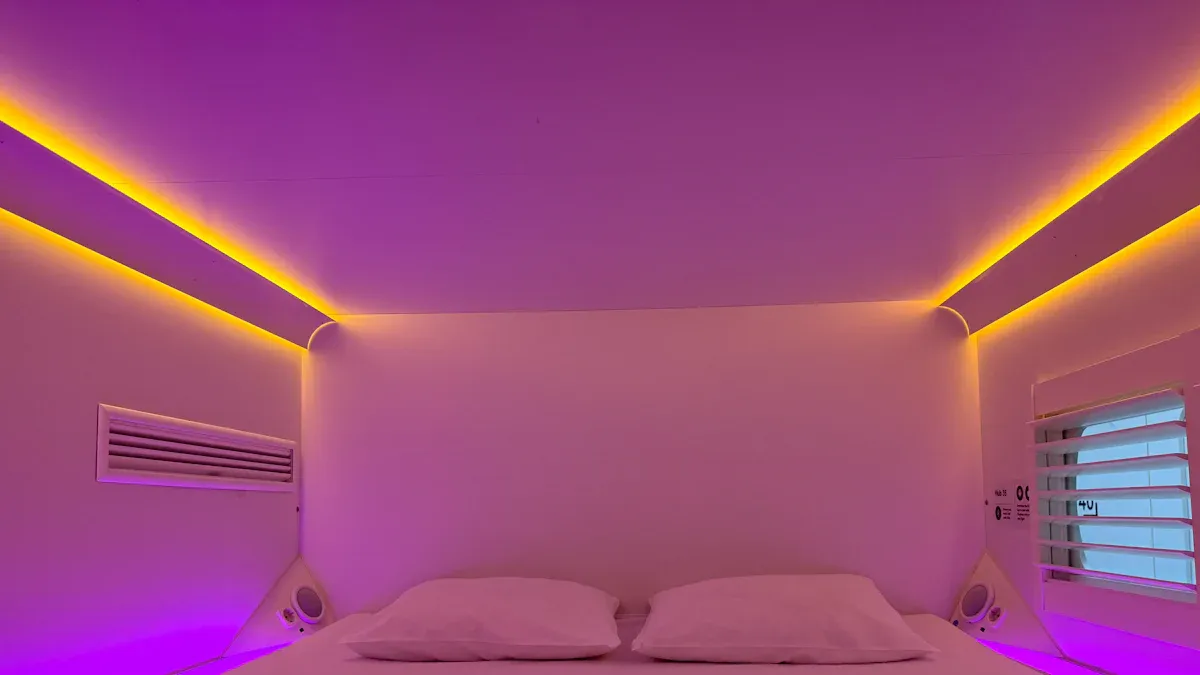
Personalized lighting controls allow guests to adjust brightness, color, and ambiance to their preferences. Using smartphones or smart panels, guests can create comfortable environments that feel like home. Some hotel brands report guest satisfaction increases of up to 32% with personalized lighting systems.
- Personalized lighting enhances perceived value and guest satisfaction
- Control over room lighting leads to more positive reviews
- Hotels experience higher repeat bookings when guests enjoy customized stays
Guest Preferences
Individual preferences vary—some guests prefer bright morning lighting, while others favor cozy evening atmospheres. Progressive hotels now inquire about lighting preferences before arrival and allow settings to be saved for future visits. This attention to detail creates personalized experiences that distinguish leading hospitality providers.
Tip: Save your preferred lighting settings in the hotel app. Your room will welcome you with your chosen ambiance on subsequent visits.
Adaptive Lighting Scenes
Adaptive lighting adjusts based on time of day or activity. Cooler tones in mornings promote alertness, while warmer tones in evenings encourage relaxation. Hotels implement these systems to create appropriate atmospheres across different spaces—welcoming lobbies, focused meeting rooms, and intimate dining areas.
- Adaptive lighting supports well-being by aligning with natural circadian rhythms
- Automated adjustments ensure optimal lighting for different situations
- Strategic lighting planning enhances feelings of safety, comfort, and energy
Hotels utilizing adaptive lighting demonstrate commitment to comprehensive guest experiences throughout the day.
Technology Integration
AI & Predictive Analytics
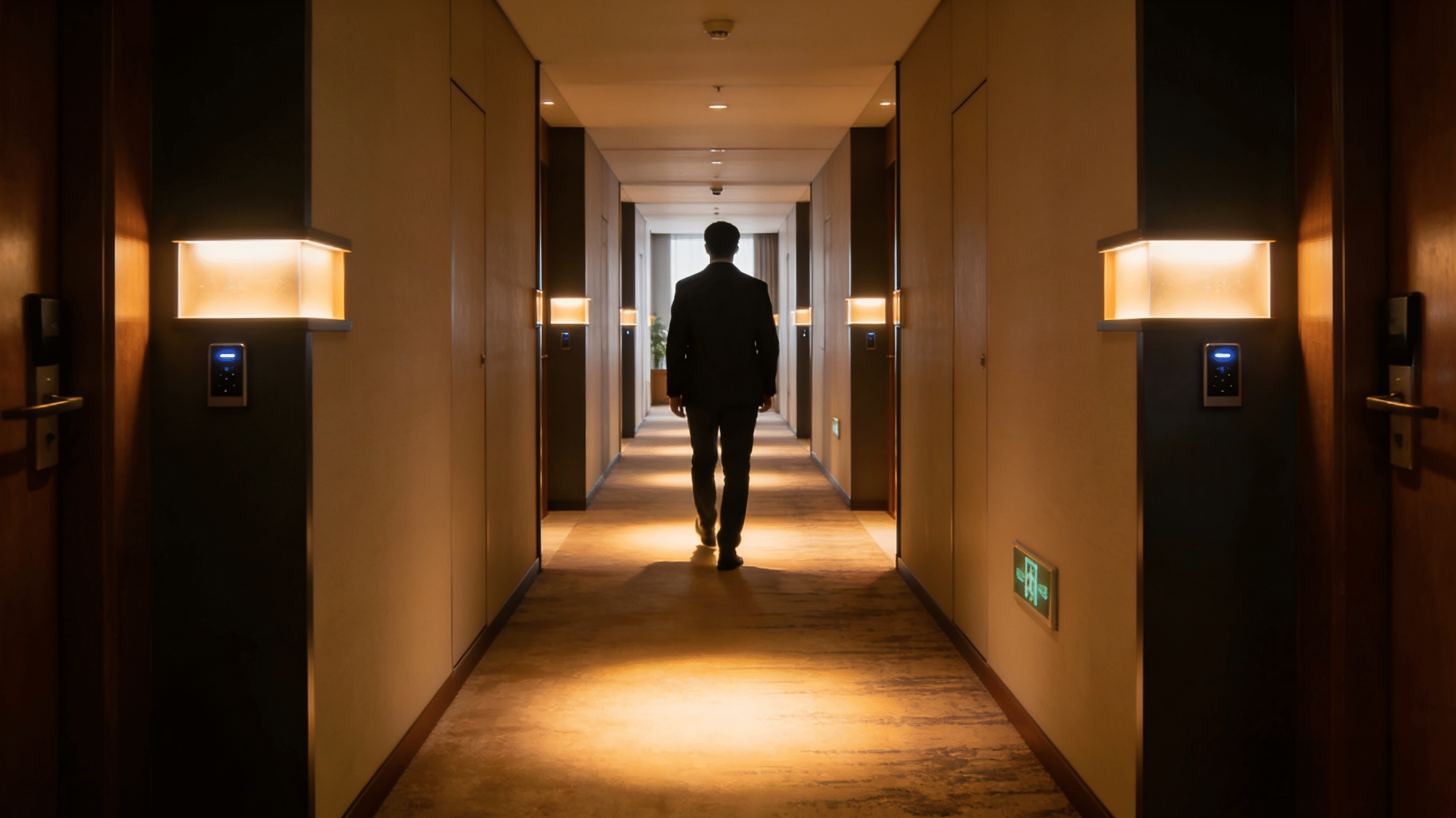
AI systems monitor guest movements and room usage patterns, learning preferences to adjust lighting automatically. Motion-activated lighting conserves energy while maintaining comfort. AI also optimizes overall energy consumption, potentially reducing utility costs by 10-20% annually.
Data-Driven Lighting
Hotels collect data from smart devices to personalize lighting experiences. Systems remember individual preferences, automatically applying them during future visits. Data analysis helps identify usage patterns and improve services, creating more personalized stays while optimizing operations.
Tip: Use the hotel app to set preferred lighting scenes. The system will remember your choices for future visits.
Smart System Integration
Smart lighting integrates with other room systems—thermostats, curtains, and entertainment—allowing unified control via single devices or voice commands. This integration creates seamless experiences where environmental elements work harmoniously according to guest preferences.
| Smart Feature | Guest Control | फ़ायदे |
|---|---|---|
| प्रकाश | Brightness, color temperature | Enhanced comfort and mood setting |
| Thermostat | Temperature adjustment | Personalized thermal comfort |
| ऊपरी उपचार | Open/close, dimming | Privacy and natural light control |
Integrated smart systems provide seamless experiences while helping hotels maintain competitive advantages.
Balancing Technology & Human Touch
Staff Training
Well-trained staff bridge technology and guest experience, assisting with smart system operation while maintaining personal service. Effective training ensures employees can troubleshoot issues and demonstrate features, preserving hospitality’s human element alongside technological advancement.
- Staff learn smart system operation and guest instruction techniques
- Employees remain prepared to resolve technical issues promptly
- Training maintains personalized service alongside technological integration
Guest Feedback
Guest opinions shape lighting system evolution. Hotels solicit feedback through surveys, direct conversations, and app reviews, using insights to refine lighting options and technological implementations.
| Feedback Method | Hotel Response |
|---|---|
| Surveys | Adjust lighting scenes and configurations |
| Direct comments | Enhance staff training programs |
| App reviews | Upgrade technological features |
Authenticity & Warmth
Technology enhances efficiency, but genuine hospitality stems from human connection. Staff add personal touches—welcoming smiles, handwritten notes, thoughtful gestures—that create memorable experiences alongside smart amenities.
Technology streamlines operations, reducing wait times and minimizing errors. However, human interaction provides warmth that transforms good experiences into exceptional ones.
While technology collects data to understand preferences, staff use these insights to create personalized moments—remembering pillow preferences or surprising guests with favorite snacks. Technology enables personalization without requiring manual effort for every interaction.
Guests value both seamless experiences and emotional connections. Balancing technological efficiency with human warmth leads to higher satisfaction, better reviews, and increased repeat business.
Successful hotels blend technology and personal touch through:
- Mobile check-ins complemented by friendly greetings
- Automated room adjustments paired with personalized welcome notes
- Chatbots for routine inquiries with staff available for special requests
The optimal balance between smart lighting and genuine care creates truly memorable stays.
Challenges & Considerations
Cost & Implementation
Smart lighting requires significant investment. Upgrading typically costs $800-$2,500 for 25-30 fixtures, plus additional expenses for smart hubs ($50-$200), professional installation ($280-$750), dimmer switches ($20-$80 each), and bulbs ($25-$60 for conventional, $200-$450 for LED). These costs can challenge smaller properties.
Common implementation challenges include:
- High installation and maintenance expenses
- Requirement for specialized labor and components
- Complex integration with existing systems
- Varying regional regulations and standards
- Rapid technological obsolescence
- Budget constraints during economic fluctuations
Privacy & Security
Smart systems collect data to personalize experiences, creating potential security vulnerabilities. IoT devices may have weaknesses that cybercriminals could exploit through phishing attacks or unsecured networks. Hotels must implement robust security measures and vet third-party vendors thoroughly.
Tip: Always use secure Wi-Fi networks and avoid sharing personal information on public networks.
Future-Proofing
Modular lighting systems allow component upgrades without complete replacements, reducing costs and downtime. Fixtures with backward compatibility enable integration of new technologies with existing setups, creating adaptable systems that evolve with changing needs.
Future-proofing strategies include:
- Selecting modular systems for simplified upgrades
- Choosing serviceable, flexible fixtures
- Prioritizing products with backward compatibility
Strategic planning helps hotels maintain modern, efficient lighting systems over time.
The Future of Hospitality Lighting
Innovations Ahead
Emerging lighting systems will offer greater adaptability for different events and moods. Hotels will utilize lighting that transforms spaces for meetings, social gatherings, or relaxation, responding quickly to varying needs.
| रुझान | विवरण |
|---|---|
| Multifunctional Lighting Control | Lighting adapts for events, meetings, or relaxation |
| Expanded Functionality | Hotels become community hubs using lighting to create unique experiences |
| Health-Focused Spaces | Increased daylight and circadian lighting improve well-being and sleep |
| Enhanced Personalization | Guests control lighting preferences via personal devices |
| Sustainable Practices | Reduced energy consumption and light pollution through intelligent systems |
The future of hospitality lighting emphasizes healthy environments and energy conservation, with increased natural light and smart controls benefiting both guests and the planet.
Evolving Guest Experience
Lighting will increasingly personalize stays and enhance moods. Properties using strategic lighting design report higher guest satisfaction and repeat visits. Some hotels now inquire about lighting preferences before arrival, applying saved settings for returning guests.
The smart lighting market is projected to grow over 18% annually from 2024 to 2029, reflecting increased hotel investment in these systems.
Hotels will become brighter, more sustainable, and increasingly welcoming, with lighting playing a central role in creating enjoyable, energy-efficient guest experiences.
Personalized smart lighting is transforming hotel stays. Properties combining intelligent systems with attentive service achieve higher guest satisfaction and increased repeat business. To lead in hospitality’s future, consider these approaches:
- Implement remotely controllable smart lighting systems
- Adopt human-centric designs that enhance room comfort
- Utilize eco-friendly options like LED and solar lighting
Future advancements will focus on energy conservation and enhanced comfort, incorporating natural light, smart sensors, and sustainable materials to create pleasant environments while supporting environmental responsibility.
उपवास
What is personalized lighting in hotels?
Personalized lighting allows guests to control brightness, color, and ambiance in their rooms using smartphones, smart panels, or voice commands, enhancing comfort and creating homelike environments.
How does smart lighting save energy?
Smart lighting utilizes sensors and timers to automatically turn off lights in unoccupied rooms. LED bulbs consume significantly less energy than traditional bulbs, reducing both energy consumption and costs.
Can I set lighting preferences before arrival?
Many hotels allow guests to select preferred lighting scenes through their apps before arrival. These settings can be saved for future visits, ensuring rooms welcome guests with preferred illumination.
Is guest data secure with smart hotel lighting?
Reputable hotels implement robust security measures including secure networks and regular system updates to protect guest data.
Tip: Use official hotel apps and secure Wi-Fi connections for additional safety.
What if I need assistance with lighting controls?
Hotel staff receive training on smart system operation and can assist with lighting controls, troubleshoot issues, and ensure optimal guest experiences.