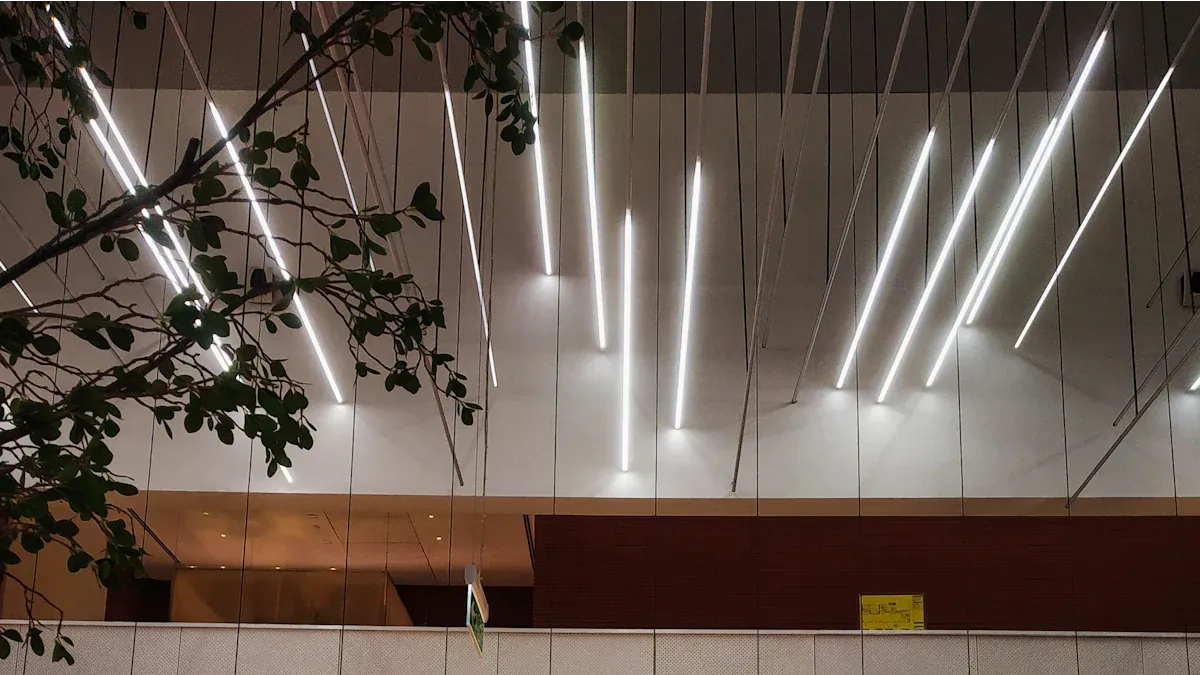
Strategic lighting design transforms room atmospheres and enhances spatial functionality. Effective illumination improves movement efficiency and comfort. Adjustable lighting systems increase usability while boosting comfort levels by approximately 25%.
| Tipo de iluminación | Objetivo | Examples |
|---|---|---|
| Iluminación ambiental | Establishes room atmosphere | Ceiling fixtures, floor lamps |
| Iluminación de tareas | Provides focused illumination for specific activities | Desk lamps, pendant lighting |
| Iluminación de acento | Highlights features and creates visual interest | Picture lights, wall sconces |
Control de llave
- Strategic lighting design can enhance mood and productivity by up to 25%. Combine natural light with adjustable artificial illumination to create comfortable environments.
- Layer ambient, task, and accent lighting to create flexible spaces that transition between activities like studying, relaxing, or socializing.
- Smart lighting controls enable brightness and color adjustments, conserving energy while establishing appropriate atmospheres for any occasion.
Why Lighting Matters
Comfort and Productivity
Lighting significantly influences mood and performance. Beyond basic visibility, proper illumination enhances comfort and facilitates task completion. Spaces featuring natural light or adjustable systems promote well-being and efficiency while reducing eye strain and glare.
- Natural light and adjustable systems enhance comfort and work efficiency
- Daylighting systems reduce glare and heat while conserving energy
- Smart lighting creates zones for concentration, collaboration, or relaxation
- Combining task, ambient, and accent lighting optimizes comfort and productivity
- Inadequate lighting causes eye strain and hinders task performance
Prevent headaches and eye fatigue through thoughtful lighting consideration.
Supporting Multiple Uses
Multi-functional spaces require rapid adaptability for activities ranging from studying to socializing. Strategic lighting facilitates seamless transitions between functions through zoned illumination approaches.
- Proper lighting enhances focus and productivity in study areas
- Inadequate illumination hinders concentration
- Combined overhead and task lighting creates productive atmospheres
- Strategic placement minimizes shadows and enhances clarity
- Natural light adds welcoming qualities to any space
| Tendencia | Descripción |
|---|---|
| Adaptability | Spaces transform for different activities and requirements |
| User-Centric Design | Personal control over lighting to match mood and comfort |
| Immersive Experiences | Lighting creates memorable moments and narrative environments in retail or hospitality settings |
Lighting design enables spaces to adapt to changing needs and activities.
Lighting Design Principles
Understanding Space Needs
Effective lighting begins with understanding spatial requirements. Each environment presents unique considerations requiring thoughtful analysis.
- Assess room dimensions and configuration. Larger areas require more illumination than compact spaces.
- Identify primary activities. Reading, working, relaxing, or entertaining each demand different lighting approaches.
- Establish personal preferences and budget parameters. Style and financial considerations influence planning from the outset.
Identify dark areas requiring supplemental illumination. Avoid glare and reflections that create discomfort. Recognize how lighting affects color perception and material appearance within spaces.
Tip: Observe your space at different times daily. Note sunlight patterns and shadow locations to inform lighting planning.
Balancing Flexibility and Function
Multi-functional spaces require lighting that adapts quickly to changing activities, from movie viewing to homework completion.
- Adaptive lighting enables single spaces to serve multiple purposes while maintaining comfort and aesthetics
- Zoning divides spaces into functional areas using furniture and adjustable lighting
Layered lighting strategies combining ambient, task, and accent illumination create balanced environments. This approach enhances spatial perception and functionality, even in spaces with height limitations. Vertical lighting near focal points improves visibility while warmer tones create evening coziness.
- Layered lighting provides control for work-focused brightness or relaxed dimming
- WELL v2 standards recommend adequate illumination with glare reduction for eye comfort and usability
- Adjustable brightness facilitates mood transitions from focused work to relaxed entertainment
Residential lighting prioritizes safety and energy efficiency, while commercial spaces emphasize visibility and style. Both environments benefit from balanced ambient, task, and accent lighting combinations.
Lighting design transcends fixture selection to create adaptable spaces supporting diverse activities.
Types of Lighting
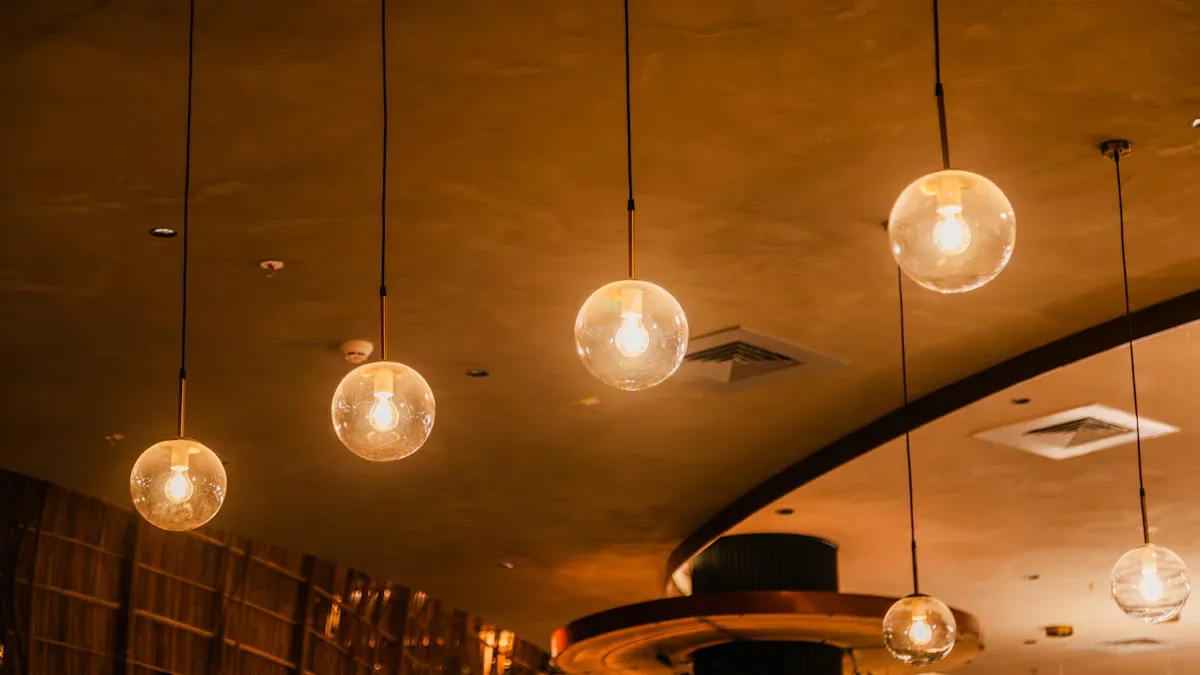
Iluminación ambiental
Ambient lighting provides foundational room illumination for safe movement and general visibility. This even light distribution prevents accidents while establishing atmosphere through ceiling fixtures, wall-mounted options, or LED strips.
| Beneficio | Descripción |
|---|---|
| Safety and Accessibility | Facilitates safe movement by eliminating dark areas and shadows |
| Aesthetic Appeal | Adds soft glow highlighting room features |
| Versatilidad | Complements diverse styles from modern to traditional |
| Eficiencia energética | LED options conserve energy with extended lifespans |
| Mood Enhancement | Adjustable brightness and color modify atmosphere |
| Functional Foundation | Provides base illumination for daily activities |
Iluminación de tareas
Task lighting delivers focused illumination for specific activities like reading, cooking, or working. Targeted light placement reduces eye strain while enhancing concentration through desk lamps, under-cabinet lighting, or reading lights.
Tip: Implement task lighting in kitchens, offices, or study areas to improve focus and task efficiency.
Iluminación de acento
Accent lighting adds stylistic emphasis and visual drama, highlighting artwork, plants, or architectural details. This illumination creates depth and character through spotlights, wall sconces, or shelf-concealed LED strips.
- Accent lighting adds spatial depth and personality
- Highlights distinctive features while creating inviting atmospheres
- Enhances living rooms, bedrooms, or hallways with memorable impressions
Luz Natural
Natural light from windows, skylights, or glass doors creates expansive, cheerful environments. Sunlight reduces electricity consumption while promoting alertness and positive moods.
- Natural light enables flexible space adaptation for various activities
- Reduces energy costs by minimizing artificial lighting requirements
- Glass flooring or expansive windows distribute sunlight throughout spaces
Effective lighting design combines these illumination types through strategic layering for aesthetically pleasing, functionally versatile spaces.
Layered and Adaptive Lighting

Layered and adaptive lighting transforms rooms into flexible environments supporting diverse activities from studying to entertaining. Combining illumination types with smart controls enables atmosphere modification, feature highlighting, and task-appropriate brightness.
Layered Lighting Strategies
Effective lighting systems stack complementary illumination types, each serving specific functions that collectively enhance space utility and comfort.
- Iluminación ambiental: Provides foundational room illumination for safe navigation
- Iluminación de tareas: Delivers focused illumination for activities like reading or working
- Iluminación de acento: Highlights artwork, plants, or architectural features
- Architectural Lighting: Emphasizes structural elements like beams or columns
- Luz Natural: Incorporates sunlight through windows or skylights for energy efficiency
- Smart Lighting Controls: Enables easy brightness and color adjustments
- Color Temperature Layering: Combines warm and cool lighting for mood creation and contrast
- Visual Hierarchy: Guides visual attention through varied brightness levels
Tip: Combine recessed ceiling lighting with desk lamps and LED strips for balanced, visually appealing environments.
These strategies appear in various settings. Entertainment spaces utilize indirect LED fixtures for accent and task lighting, while corporate environments employ recessed downlights with natural illumination for collaborative atmospheres. Museums manage large spaces with track lighting for artwork display, and open-plan offices create activity zones through flexible lighting.
Adaptive Lighting Controls
Smart controls enhance lighting systems through adjustable brightness, color, and fixture activation via touch or voice commands, improving energy efficiency and comfort.
| Beneficio | Descripción |
|---|---|
| Scalability | Enables easy addition of fixtures or layout modifications as needs evolve |
| Installation Simplicity | Wireless systems require minimal wiring, reducing setup time and cost |
| Product Flexibility | Allows mixing devices from various manufacturers for customized solutions |
| Wellness Integration | Smart lighting aligns with daily rhythms to enhance well-being |
| User Accessibility | Intuitive controls enable easy adjustment by all users |
| Energy Management | Sensors and smart features reduce electricity consumption and costs |
| Practical Application | Flexible workspaces utilize smart controls to adapt lighting for different events |
While initial costs may be higher, long-term savings accrue through reduced energy consumption and maintenance. Smart controls can decrease energy bills by up to 60%.
| Aspecto | Descripción |
|---|---|
| Initial Investment | Higher upfront costs for advanced lighting systems |
| Long-Term Savings | Significant reductions in energy and maintenance expenses over time |
| Eficiencia energética | Smart controls minimize power consumption and utility costs |
| Expense Reduction | Proper configurations can reduce energy consumption by over 50% |
Note: Begin with smart controls for future-proof spaces offering increased options and long-term savings.
Zoning and Smart Systems
Zoning divides spaces into distinct areas with dedicated lighting. Smart systems enable independent zone control, adapting illumination for specific activities through task lighting for work areas, ambient lighting for relaxation spaces, and accent lighting for feature highlighting.
- Different fixtures serve specific zones, such as bright task lighting over desks and soft ambient illumination in lounge areas
- Dimmable lights and smart controls adjust brightness for reading, entertainment, or social gatherings
Zoning with smart systems enhances adaptability through customized illumination for each space area, enabling rapid transitions ideal for multi-functional environments.
Tip: Create zones with smart switches or applications, establishing presets for “study mode,” “movie night,” or “entertaining” that switch instantly.
Layered and adaptive lighting design provides comfort, style, and flexibility for versatile space utilization.
Practical Tips
Fixture Selection
Select durable, aesthetically pleasing fixtures constructed from quality materials like brass or stainless steel that withstand wear while enhancing space character. Begin with statement fixtures that attract attention, complemented by coordinating lights for cohesive appearances.
- Evaluate each fixture’s functional requirements
- Ensure compatibility with room style
- Consider installation and maintenance simplicity
Combining ambient, task, and accent lighting creates distinct zones while enhancing overall functionality.
Placement and Layout
Strategic placement maximizes effectiveness. Position windows and openings to optimize daylight capture. Light-colored walls and reflective surfaces amplify light distribution, while skylights and well-placed windows increase natural illumination.
- Incorporate flexible controls to adjust light levels as sunlight changes
- Enable user adjustment for different tasks
- Coordinate artificial and natural lighting for consistent brightness
Natural light reduces costs and energy consumption, maximizing its use whenever possible.
Integrating with Design
Lighting design should harmonize with room aesthetics. Use consistent color temperature bulbs and complementary fixture finishes. Layer ambient, task, and accent lighting with dimmable controls for atmospheric adjustment.
Profile lighting defines areas through brightness and direction, reducing reliance on physical dividers or walls.
| Tipo de iluminación | Objetivo |
|---|---|
| Iluminación ambiental | Provides overall room illumination |
| Iluminación de tareas | Focuses on specific work areas |
| Iluminación de acento | Highlights distinctive features |
Choose long-lasting fixtures like LEDs to minimize maintenance. Seek warranties for extended performance assurance.
Common Mistakes
Overlooking Flexibility
Spaces should facilitate rather than hinder activities. Without flexibility planning, lighting quickly becomes outdated. Central single-light solutions may suffice initially but limit future adaptability.
- Spaces lacking flexible lighting cannot accommodate evolving needs
- Lighting may become prematurely obsolete
- Rooms lose functionality and comfort over time
Tip: Anticipate change through dimmers, smart controls, and diverse lighting types that adapt with evolving requirements.
Ignoring User Experience
Since significant time is spent in illuminated spaces, lighting should enhance experience. Neglecting user considerations creates discomfort and reduces effectiveness.
| Impact of Ignoring User Experience | Result |
|---|---|
| Decreased productivity | Negative |
| Increased eye strain | Negative |
| Reduced satisfaction | Negative |
| Enhanced focus | Positive |
| Improved performance | Positive |
| Elevated morale | Positive |
User-centered lighting consideration enhances comfort, productivity, and satisfaction.
Poor Fixture Choices
Inappropriate fixture selection creates multiple problems, including uneven illumination, safety hazards, and increased stress.
| Negative Outcome | Descripción |
|---|---|
| Decreased productivity | Inadequate lighting hinders concentration and slows task completion |
| Increased accidents | Poor placement creates visibility issues leading to trips or collisions |
| Mental well-being impacts | Insufficient illumination contributes to fatigue, low mood, or stress |
Combine ambient, task, and accent lighting. Position fixtures at appropriate heights and utilize controls to maintain safe, comfortable environments.
- Begin with clear lighting design vision aligned with specific needs
- Implement layered lighting with smart controls for flexibility and comfort
- Adjust illumination for safety, aesthetics, and energy efficiency
Effective lighting enhances daily mood and concentration while supporting diverse activities.
Preguntas frecuentes
How do I choose appropriate lighting for different areas?
Consider each area’s primary activities. Use brighter illumination for work zones and softer lighting for relaxation areas. Combine multiple lighting types for optimal results.
Can smart bulbs work in standard fixtures?
Most smart bulbs fit standard fixtures. Verify bulb dimensions and fixture compatibility before installation.
What is the simplest method to increase lighting flexibility?
Begin with plug-in lamps or smart bulbs that can be repositioned or controlled remotely, providing quick adaptation for various activities.